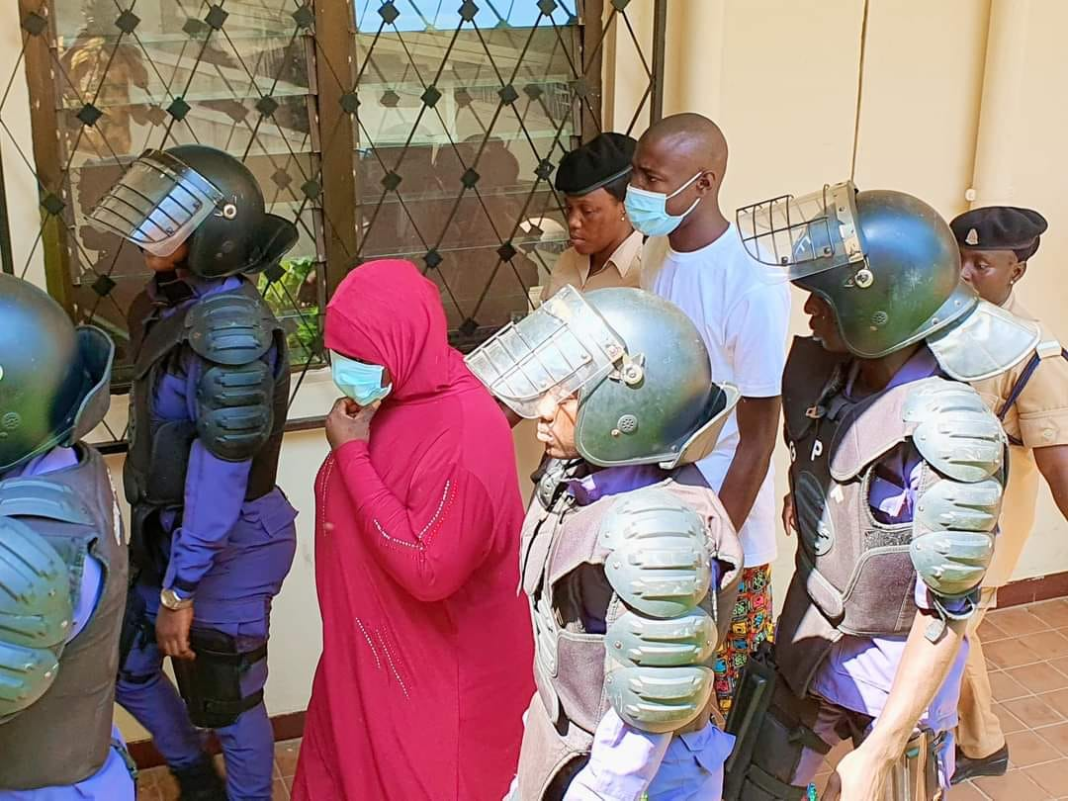
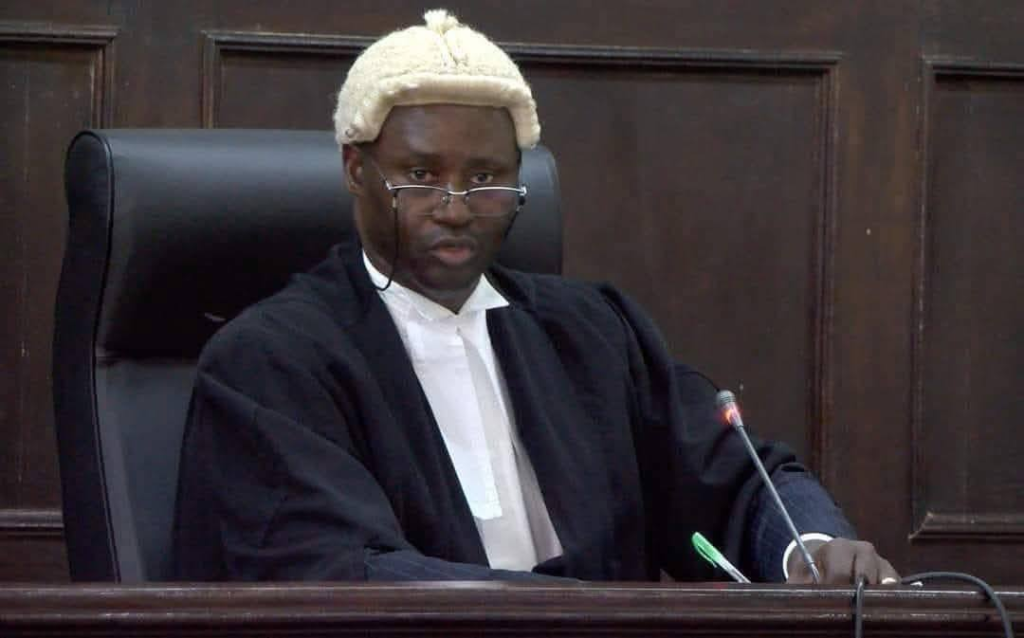
Defence Counsel A. Sillah has filed his final brief of argument on behalf of Amie Bojang before Justice Jaiteh, urging the court to acquit and discharge Amie Bojang, the second accused in the Sukuta-Jabang Traffic Lights shooting trial as the case gets closer to judgment.
Amie Bojang, the sister of the first accused Ousainou Bojang, is charged with a single count of being an accessory after the fact to murder; a charge the defence argues is legally unsustainable given the “total collapse” of the prosecution’s case against her brother, the first accused Ousainou Bojang.
Counsel Sillah’s brief centres on the legal definition of an accessory after the fact under Section 202 of the Criminal Code. Counsel Sillah argues that for a conviction to stand, the state must prove two things; that a murder was committed and that the accused knew about it when assisting.
Counsel Sillah further argues that the prosecution has “woefully failed” to prove that Amie Bojang had any knowledge of the alleged crime when she assisted her brother in travelling to Senegal, a requirement for conviction under Section 202 of the Criminal Code.
Counsel Sillah’s primary contention is that Amie Bojang’s actions were those of a supportive sister helping a brother in distress, entirely unrelated to the shooting of the police officers.
Counsel Sillah further stated that Amie Bojang testified that she assisted her brother in traveling to Senegal solely to seek spiritual help from a marabout for a personal crisis involving a “white lady” who was allegedly blackmailing him with naked photos and Amie maintained that her role was limited to escorting Ousainou to the border so he could consult a marabout in Senegal for spiritual assistance with this personal crisis.
Counsel Sillah’s brief highlighted that during Amie’s testimony, she emphasised that she did not hear about the police shooting until after her brother had already crossed into Senegal. She noted that Ousainou did not act confused or attempt to hide while in the taxi or at the border.
Counsel Sillah point-by-point critiques the prosecution’s evidence, claiming it failed to link either of the accused to the crime. Counsel Sillah highlighted that the only surviving victim, PC Ansey Jawo (PW10), failed to identify Ousainou Bojang at the scene, admitting her “recognition” came only from social media photos later.
Counsel Sillah argues that call logs (Exhibit D13) prove the two soldier witnesses were not at the beach as they claimed, casting doubt on their entire testimony of witnessing the shooting and chasing the gunman.
Counsel Sillah contends that the alleged confessions given to police (PW5 & PW6) were obtained under “intense questioning” and were not corroborated by any other officers present in the vehicle.
Also, Counsel Sillah argued that while the taxi driver, Abdoulie Drammeh (PW9) claimed he mentioned the shooting during the trip, Counsel Sillah pointed out that Amie did not respond, which is consistent with someone who did not know about the shooting. Counsel pointed out that Abdoulie Drammeh also testified he did not recognise either accused person until three days later when shown photographs by authorities.
Counsel Sillah indicated that Bubacarr Manneh, who drove Ousainou from the border to Diouloulou, testified that the first accused appeared “calm” and “showed no sign of confusion or emotion,” which Counsel Sillah argues is inconsistent with someone fleeing a murder.
Counsel Sillah labelled the testimony of Mama Jabbie who claimed Ousainou confessed to her as unreliable, highlighting her admitted loss of the alleged audio recording and her potential motivation by the government’s D1 million bounty.
Counsel Sillah’s brief then focuses on the legal principle of “accessory after the fact.” Counsel Sillah argues that the liability of an accessory is legally dependent on the commission of the principal offence. Counsel Sillah maintains that because the prosecution failed to provide forensic evidence (DNA, fingerprints, or ballistics) or credible eyewitness identification linking Ousainou Bojang to the shooting, the case against him must fail.
Counsel Sillah cites legal authorities stating that if the principal offender did not commit the crime, there can be no liability for anyone aiding or assisting them afterwards.
Counsel Sillah also highlighted what he termed the “bad faith” of the State. He cited public press briefings held by top officials including the Presidential Spokesperson (DW6) and the National Security Advisor (DW8), who accused them of making prejudicial statements about the accused before investigations were complete.
Counsel Sillah emphasises that Amie’s version of events is supported by independent evidence (Alibi and Digital Evidence). Sillah stated that witness Kathleen McGee (DW11) provided WhatsApp logs (Exhibit D38) showing that Ousainou was in continuous communication with her and a friend named Sharon during the time of the shooting, discussing his anxiety over the blackmail scam.
Counsel Sillah also raised concerns regarding the conduct of the state highlighting that Amie Bojang testified she was detained for over a week, far exceeding the 72-hour constitutional limit. Also testified to her own difficult experience in custody, including being held in unhygienic conditions and being pressured to identify individuals and locations associated with her brother’s travel.
Counsel Sillah’s final legal pillar is the principle of “dependency.” Counsel Sillah argues that since the state failed to prove forensic links (DNA or ballistics) or provide a credible identification of Ousainou Bojang as the shooter, there is no “principal offence” to be an accessory to.
Counsel Sillah concludes that the prosecution’s case is built on “remote possibilities” rather than proof beyond a reasonable doubt. Counsel Sillah prays that the court resolves all doubts in favour of the accused and orders the acquittal and discharge of Amie Bojang.
Next the state’s brief of argument.