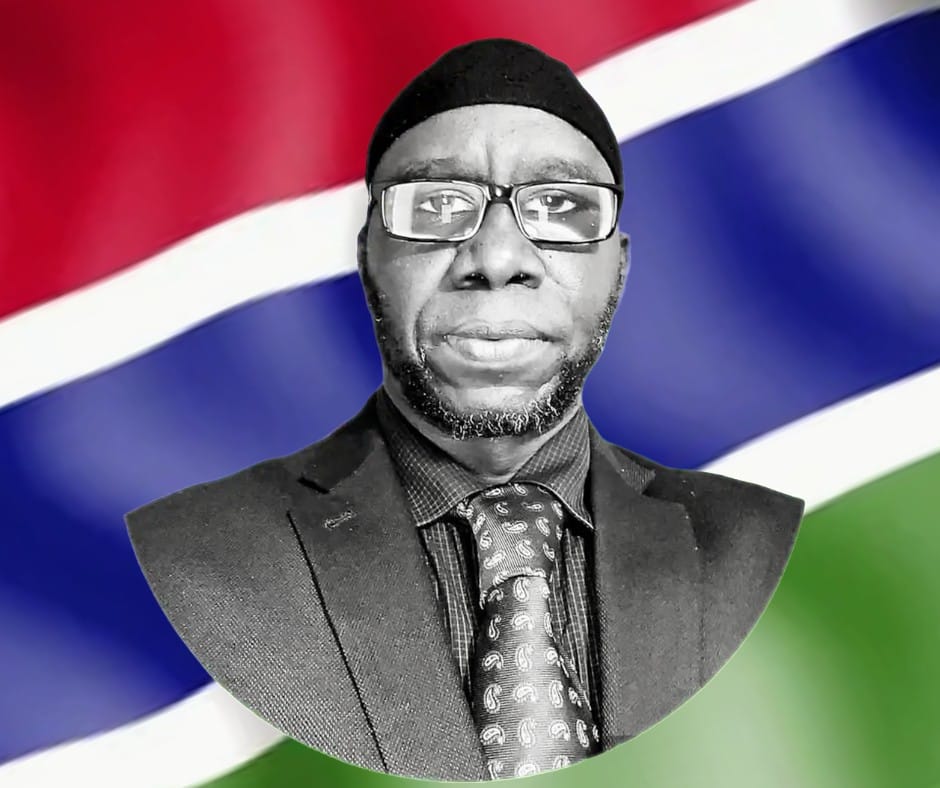

At the second edition of the National Dialogue Forum, Chief Justice Hassan B. Jallow highlighted the essential importance of national solidarity in promoting unity and advancement in The Gambia.
He emphasised that the responsibility for maintaining social cohesion and mutual respect lies with both individuals and the state.
“Solidarity is the glue; it is the cement that binds our diversities and distinctions together. We must all be committed to enhancing, securing, and advancing national solidarity, fostering a state of oneness, togetherness, and unity among us,” he said.
Chief Justice Jallow noted that although solidarity may not be a strictly legal concept, it encompasses both legal and semi-legal dimensions. He observed that a robust basis for solidarity exists in two essential legal instruments – one international and one national – both grounded in The Gambia.
The first, he stated, is the Banjul Charter on Human and Peoples Rights, Africa’s foremost human rights instrument, in the process of its creation, adoption, and implementation. Under the leadership of Sir Dawda Kairaba Jawara, The Gambia played a crucial role. He articulated that the charter acknowledges unity and solidarity as fundamental responsibilities of responsible citizenship, detailing the various obligations individuals hold towards their families, society, and the state.
He emphasised that the charter requires individuals to honour and appreciate their fellow citizens without discrimination and to cultivate relationships that encourage mutual respect, tolerance, and social harmony.
“He emphasised the importance of preserving and strengthening positive African cultural values in our interactions with other members of society, fostering a spirit of tolerance, dialogue, and consultation, ultimately contributing to the moral well-being of our community.”
Chief Justice Jallow also referred to The Gambia’s Constitution, specifically Chapter 20, which establishes the directive principles of state policy. He explained that these principles are in harmony with the provisions of the African Charter regarding citizens’ responsibilities in maintaining national sovereignty.
“For instance, section two 20 of the constitution declares that the exercise and enjoyment of rights and freedoms are inseparable from the performance of duties and obligations. Every citizen, accordingly, should promote the prestige and good reputation of the country, uphold and defend the constitution, foster unity, live harmoniously with others, respect the rights and freedoms and legitimate interests of others, and refrain from acting in a manner detrimental to the welfare of other persons,” he said.
He noted that it is not solely individual citizens who bear duties and obligations; the constitutional directive principles of state policy also delineate specific responsibilities of the state. These responsibilities encompass the promotion of national integration and unity, national sovereignty and independence, the political objectives of democracy, adherence to the rule of law and human rights, socio-economic advancement, education, good health, a sound and satisfactory environment, quality education and training, as well as the care and protection of the vulnerable within our community.
“Solidarity is a vital aspect of nationhood; although our nation may be small, it is nonetheless as complex and diverse as the larger states that surround us.” All these began to showcase a variety of regions, along with tribal and racial diversity. Diversity It presents challenges, yet it also offers opportunities; it can be viewed as a resource that, when effectively utilised, enriches a nation and serves as a robust foundation for peace and development,” he stated.