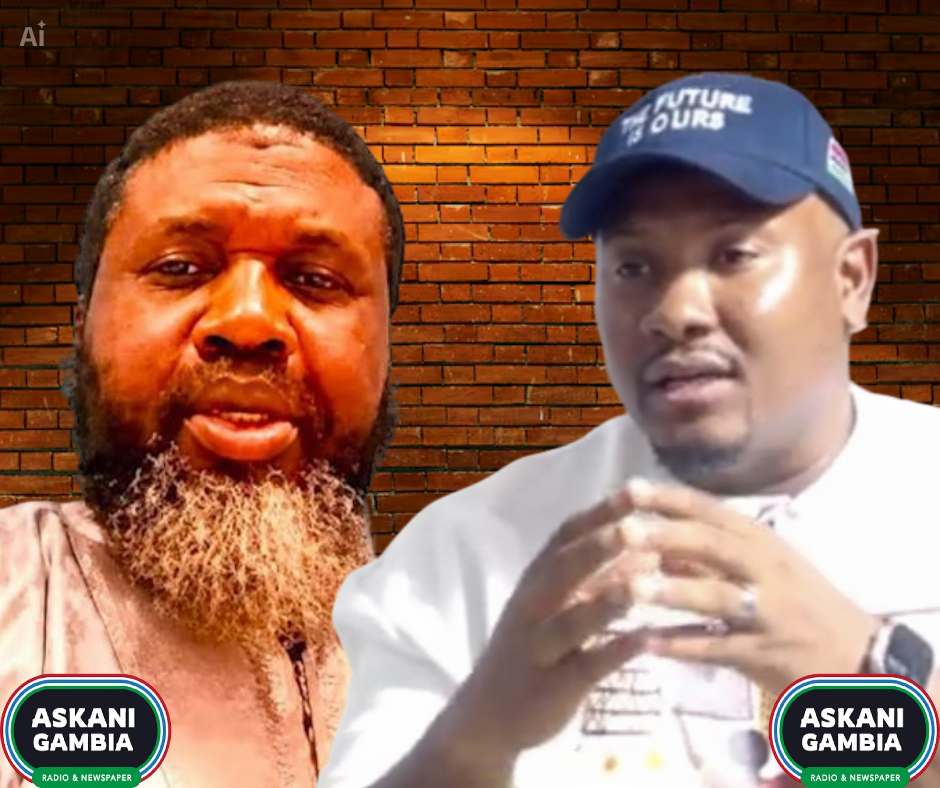
An imam identified as Daru Sanyang has launched a wide-ranging attack on Kanifing Municipal Council Mayor and UNITE presidential candidate Talib Ahmed Bensouda, questioning his ancestry, criticizing his supporters and challenging his decision to seek the presidency.
The remarks were contained in an audio recording that has circulated widely. Sanyang made several allegations about Bensouda, his family, political supporters and recent opinion polls, but provided no evidence to substantiate many of his claims.
Bensouda has emerged as one of the prominent opposition figures ahead of The Gambia’s December 5, 2026 presidential election.
In the recording, Sanyang questioned the composition of Bensouda’s support base and made references to supporters he described as “Sulas”, a term commonly used in The Gambia to refer to people perceived to have Arab or North African backgrounds.
He subsequently turned his attention to Bensouda’s family and questioned the Gambian identity of members of the mayor’s immediate family.
Among his claims was that Bensouda’s wife was a Guinean from Fouta and had no connection to The Gambia. He also questioned the Gambian background of Bensouda’s father.
Those claims, however, are not supported by the available information. Bensouda’s father and wife are Gambians by birth.
Sanyang also criticized Bensouda’s presidential ambitions, suggesting that if the mayor was determined to obtain political power, he should join the military. He otherwise urged him to wait rather than seek the presidency at the present time.
The imam further accused Bensouda of using money and bribery to advance his political ambitions and alleged that the mayor was neglecting his responsibilities at KMC while concentrating on national politics. No evidence was presented to support those allegations.
Sanyang was particularly critical of young people supporting Bensouda, using insulting language to describe his supporters. He also questioned recent polling that indicated significant support for Bensouda among young voters.
Without presenting evidence, Sanyang alleged that pollsters had been paid by Bensouda and accused them of fabricating their findings.
The claims are significant because recent polling has contributed to Bensouda’s growing national political profile. The latest Gambia Participates survey cited in recent political discussions placed him at 19 percent, behind President Adama Barrow and veteran opposition leader Ousainou Darboe.
Sanyang did not provide evidence of any financial relationship between Bensouda and the organization responsible for the polling.
The recording also contained unusual warnings concerning food allegedly provided by Bensouda and President Barrow. Sanyang suggested, without evidence, that food distributed by politicians could contain spiritual substances intended to influence those who consumed it.
He also made serious allegations involving Nfally Fadera of Bitilo and Ambassador Essa Bokar Sey. Those claims were not supported by evidence in the recording.
Identity Enters the Political Debate
The significance of Sanyang’s remarks extends beyond the allegations themselves. His focus on Bensouda’s ancestry, family background and supporters reflects the increasingly prominent role that questions of identity are playing in the political discourse ahead of the 2026 election.
For Bensouda, the controversy presents a political challenge beyond criticism of his record as mayor or his presidential programme. Questions about ancestry and national identity can carry considerable political weight in The Gambia, particularly during election campaigns.
However, claims about an individual’s citizenship, parentage or ancestry are matters that require evidence rather than political assertion.
Sanyang’s recording illustrates how political competition can move from disagreements over policies and governance into personal attacks involving family origins and identity.
With campaigning expected to intensify as the December election approaches, the controversy also highlights the need for political debate to remain grounded in verifiable information.
Bensouda, Sanyang and the other individuals mentioned in the recording could not immediately be reached for comment on the allegations.