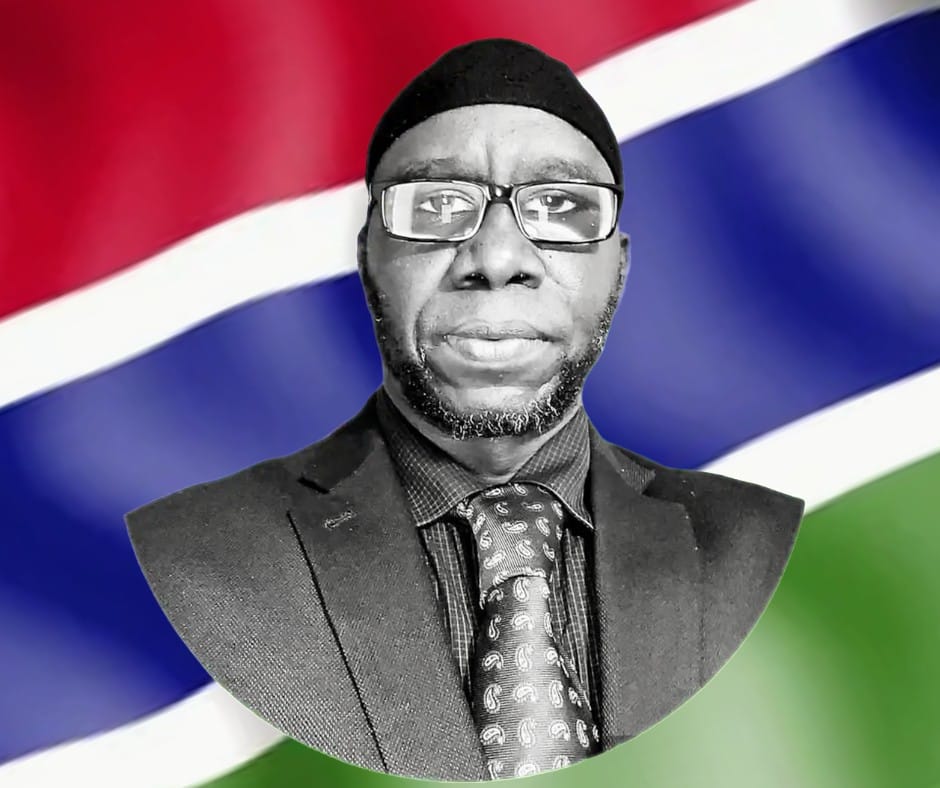
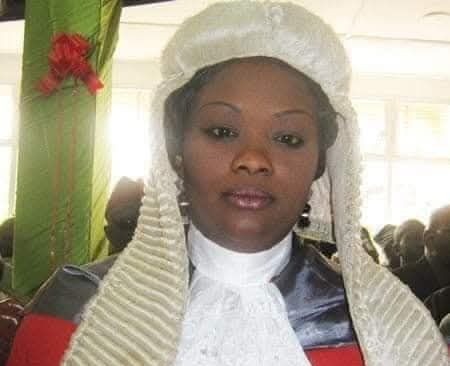
The High Court has acquitted and discharged 66-year-old Bilali Jallow, a traditional herbalist, who was accused of the rape of a 28-month-old infant. In a judgment delivered by Justice Z.N. Mboob, the court ruled that the prosecution failed to prove its case beyond a reasonable doubt, highlighting evidentiary gaps and the public nature of the alleged crime scene.
The State’s case relied heavily on the testimony of the victim’s mother (PW1). The victim’s mother, testifying as the first prosecution witness (PW1), recounted the harrowing afternoon. She told the court she had left her daughter in a pit latrine at Silver Kunda, Faji Kunda, to fetch water.
Upon returning, she heard “loud and painful” cries coming from the toilet and saw Bilali Jallow a traditional herb seller exiting the toilet.
“On reaching the toilet door, I saw the accused person coming out,” PW1 testified. She described finding her child bleeding from her private parts, with blood drops visible on the floor. The child was immediately rushed to the hospital, where medical staff confirmed signs of penetration.
State prosecutors argued that although there were no eyewitnesses to the act, the circumstantial evidence was “overwhelming,” noting that Jallow was the only person seen leaving the immediate vicinity of the toilet.
While a medical report (Exhibit E) confirmed injury to the vaginal orifice, the medical testimony added layers of complexity to the case. Dr Babading Daffeh testified that while a child of that age could not have caused such injuries to herself, the blood and infection present could have stemmed from several causes. He noted that the child was suffering from a pre-existing infection at the time of the examination.
Taking the stand, Bilali Jallow (accused), a father of 15, vehemently denied the allegations. He claimed he was washing plates by his door when the commotion started and never entered the toilet.
Bilali Jallow also alleged that the victim’s parents had approached him at the police station, offering to withdraw the case in exchange for D30,000. “I told them I would not pay money for an offense I did not commit. I will place God between us to judge,” Bilali Jallow stated.
Defending the accused, counsel M. Barrow contended that the prosecution failed to provide direct evidence or the required corroboration to link Bilali Jallow to the crime. The defence pointed out several weaknesses in the prosecution’s case.
Defense Counsel M. Barrow argued that the toilet was a public facility in an unfenced compound, accessible to the community and students. Also argued that another man, Ebrima, lived in the compound and was present shortly before the incident, adding that police officer testified that no bloodstains were found in the toilet, nor was any blood found on Bilali Jallow’s clothes.
In her determination, Justice Z.N. Mboob emphasized that the “golden thread” of criminal law places the entire burden of proof on the prosecution. Justice Mboob highlighted several factors that necessitated an acquittal.
Justice Mboob stated that the mother admitted under cross-examination that neither she nor any other person witnessed the act of sexual intercourse; a visit to the crime scene (the locus in quo) revealed that the compound was unfenced and the toilet was a public latrine accessible to the entire community. Justice Mboob noted the toilet door was broken and not secure.
Also, Justice Mboob stated that it was established during the trial that other men lived in the compound, including a younger man named Ebrima who was present shortly before the incident occurred and police officers testified that no blood stains were found in the toilet during their inspection, nor was any blood found on Bilali Jallow’s clothing during a search of his room.
Justice Mboob further stated that the presence of other residents and the lack of forensic links to Bilali Jallow left other possibilities open, including the involvement of unknown perpetrators.
Justice Mboob concluded that the evidence did not meet the high standard required for a criminal conviction. Bilali Jallow was acquitted and discharged. Justice Mboob concluded by reminding both parties of their right to appeal the decision.