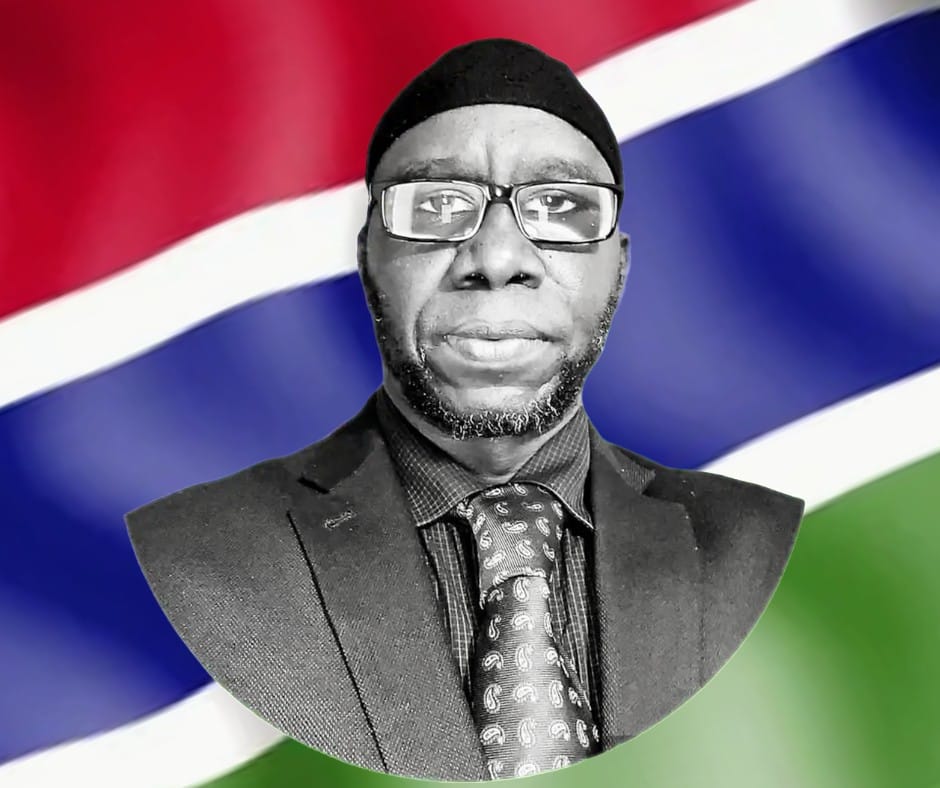
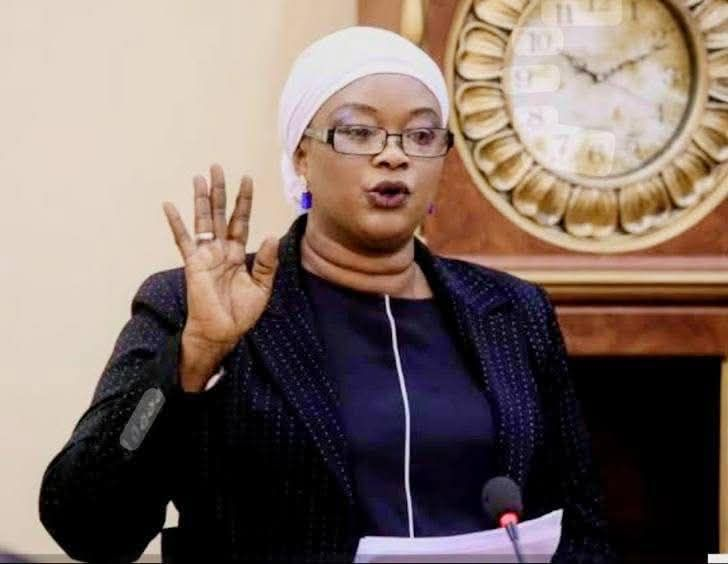
The High Court, presided over by Justice Z.N. Mboob, has discharged and acquitted Baboucarr M.S. Jobarteh, the former Director General of Protocol at the Ministry of Foreign Affairs, on all criminal charges related to the alleged fraudulent issuance of diplomatic passports.
Baboucarr Jobarteh was tried on two counts under the Criminal Code, including making documents without authority. It’s the prosecution’s case that the accused approved the issuance of diplomatic passports to Ndey Njie and Isatou Manneh who were not diplomats or entitled to such documents.
Second charge; obtaining goods by false pretences: Allegations that he obtained D175,000 each from Sulayman Keita and Abdul Wahab Jabbie by falsely claiming he could procure diplomatic passports for them.
The trial prosecution called witnesses to prove their case against Jobarteh. Ndey Njie and Isatou Manneh testified that they were lured by an agent named Ousman Drammeh, who promised them American visas and diplomatic passports to facilitate their travel to the USA.
Ndey Njie paid D350,000 for the process, while Isatou Manneh paid D250,000. Both women stated they were taken to the Ministry of Foreign Affairs and the Immigration Department to sign forms, eventually receiving diplomatic passports despite having no diplomatic status.
Isatou Manneh, who was seven months pregnant at the time, later sought a refund when she realised the passports did not guarantee entry to the US as promised.
The prosecution’s case was strengthened by testimony from a police panel that investigated the illegal possession of diplomatic passports. Inspector Hassan Baldeh testified that the panel discovered 41 individuals in possession of diplomatic passports who did not meet the required criteria. All 41 approval forms were allegedly signed by Baboucarr Jobarteh.
Njogou Saer Bah, a former Permanent Secretary at the Ministry, clarified the strict hierarchy for passport approval. He noted that while the President has the authority to direct the issuance of such passports to anyone (including business people or non-Gambians), normal applications must follow specific criteria.
Njogou Saer Bah testified that certain forms approved by Baboucarr Jobarteh, including those for students not related to diplomats, were clearly invalid.
Taking the stand in his own defence, Baboucarr Jobarteh denied any fraudulent intent or receiving money from the applicants. He argued that as Director General of Protocol, he had the independent authority to approve passports and often acted on directives from the Office of the President.
Baboucarr Jobarteh claimed that after the change of government in 2017, several political parties submitted lists of supporters to be granted diplomatic passports. He specifically recalled Ndey Njie’s name being on a list brought by the President’s Chief Driver, which he processed believing it was an official request from the presidency.
Baboucarr Jobarteh maintained that sometimes the President could issue verbal or informal directives through staff (like the Chief Driver).
Throughout the proceedings, the court weighed Baboucarr Jobarteh’s claims of official duty against the prosecution’s evidence of unauthorised approvals and financial exploitation.
While Baboucarr Jobarteh maintained he never approved a passport for an unqualified person, the trial highlighted significant loopholes in how these sensitive documents were handled within the Ministry.
In her detailed judgment, Justice Z.N. Mboob stated that the prosecution “woefully failed” to provide the cogent and credible evidence required to meet the high standard of proof in criminal law.
Justice Z.N. Mboob’s decision rested on several findings. Justice Mboob found that Jobateh did not sign documents in another person’s name; he signed in his official capacity as Director General of Protocols, which he had the legal authority to do.
On the missing witness; Justice Mboob noticed that key persons mentioned in the charges, such as Abdul Wahab Jabbie, were never called to testify, nor was their previous evidence adopted for the trial.
Justice Mboob found direct denial of key prosecution witnesses, including Sulayman Keita, who categorically stated during testimony that they had never dealt with Baboucarr Jobarteh or given him any money.
Justice Z.N. Mboob acknowledged that while the criteria for passports were often bypassed, the defence’s claim that the President could issue verbal or informal directives through staff (like the Chief Driver) created enough doubt to prevent a conviction.
Justice Mboob did not hold back in criticising the State Law Office’s handling of the case. Justice Mboob noted a lack of “consistency and procedural rigour,” highlighting that repeated amendments to the charges and the withdrawal of certain accused persons mid-trial caused unnecessary delays and weakened the case.
Justice Z.N. Mboob remarked that while the evidence might have suggested an “abuse of office” or a “politicised” process that undermined the integrity of Gambian passports, the specific criminal charges of fraud and obtaining goods by false pretences were simply not proven.
“The Accused person Baboucarr Jobateh is accordingly discharged and acquitted on all charges. This is my judgment.” Hon. Justice Z.N. Mboob.
Justice Z.N. Mboob concluded by recommending that the Ministry of Foreign Affairs establish more “robust scrutiny mechanisms” to ensure the integrity of diplomatic documents and prevent future institutional abuse.