
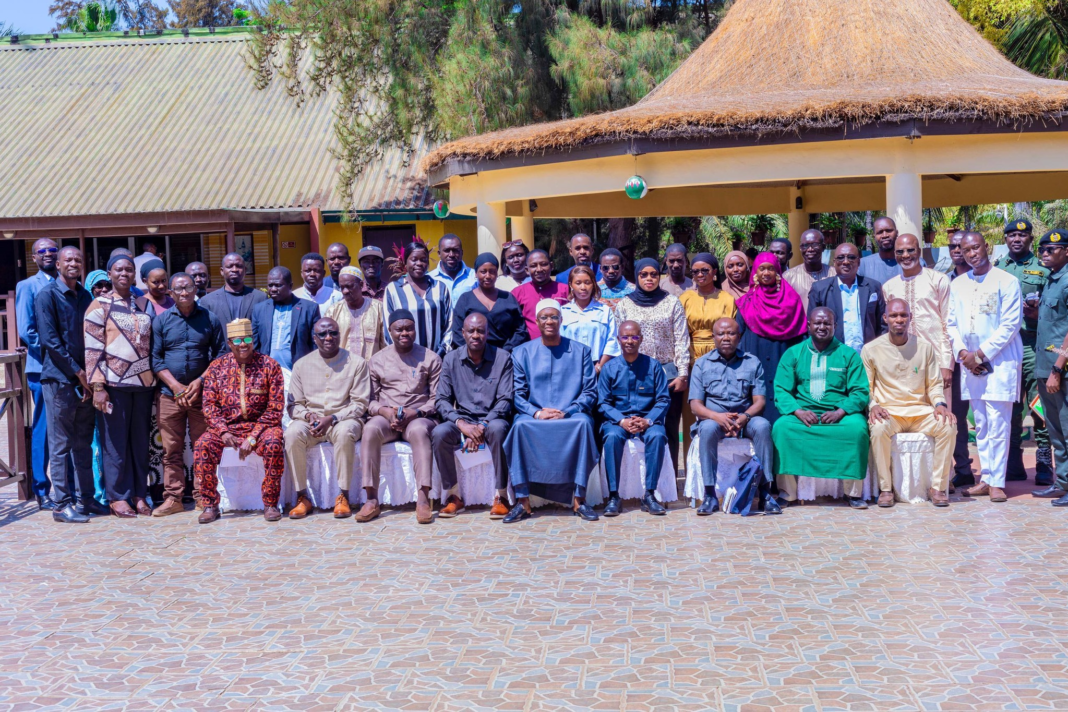
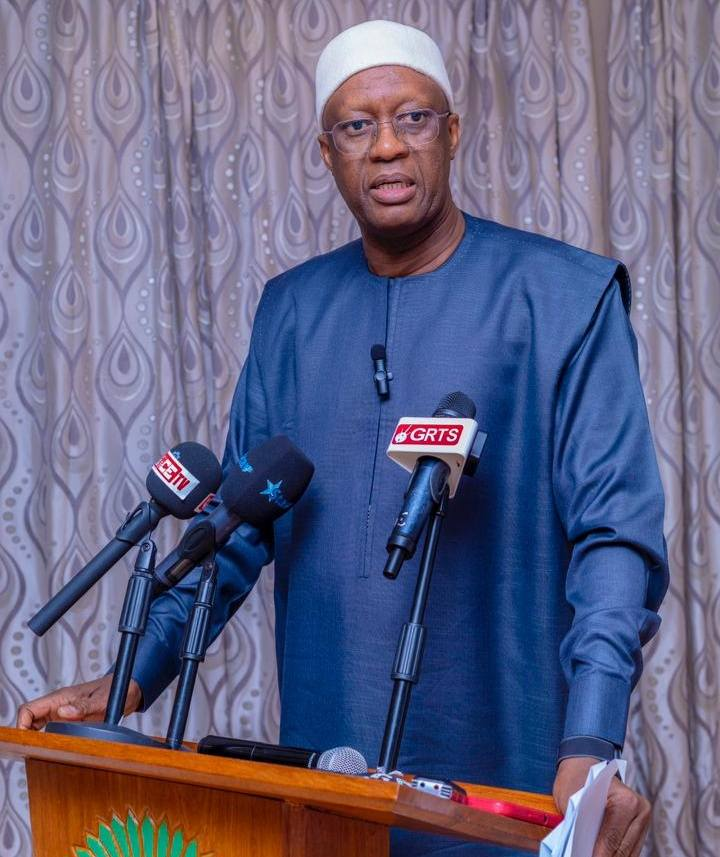
The Gambia Revenue Authority (GRA) has conducted a one-day sensitisation training for 30 journalists on the upcoming Integrated Tax Administration System (ITAS). The workshop, organised in collaboration with the Network of Financial and Tax Reporters (NFTR) and funded by the World Bank, aims to equip media practitioners with the technical knowledge required to accurately report on the Authority’s latest digitalisation drive.
During the event, GRA leadership emphasised that the media is a “critical partner in national development” whose engagement is essential for the success of such far-reaching reforms.
In his opening remarks, Commissioner General Yankuba Darboe expressed his profound appreciation for the media’s role in informing and shaping public discourse.
“I’m happy seeing 30 journalists here,” Commissioner General Darboe stated. “The media houses make us get to places where we ordinarily cannot go. We have taken a very serious stance about the media, and that is why we intend to have this sensitisation to sensitise others through you”.
Commissioner General Darboe highlighted that the transition to ITAX is a pivotal step in modernising tax administration in the country.
Commissioner General Darboe further stated that the reform is ultimately about transparency and “building the future of The Gambia”. He emphasised that tax revenue is what allows the government to construct roads and public infrastructure.
He informed the gathering that the ITAX system is a secure, web-based platform designed to move services online. Business owners will be able to conduct payments instantly and file tax returns “from the comfort of your office at any time of the day”.
Commissioner General clarified that the GRA’s interest lies only in the “fair share” of tax as prescribed by law. “We don’t want to take any money from anybody… we only want the tax element of your business,” he added, noting that taxes are a fair obligation for the protection and peaceful atmosphere provided by the government.
He stated that the new system is expected to eliminate the need for taxpayers to physically move from “one table to another” at GRA offices. It will reduce compliance time, minimise human error, and provide a clear digital footprint for every transaction.
Darboe urged journalists to be “champions” of the new system. He cautioned that before communicating, they must fully understand the functionalities to ensure accurate dissemination of information to the public.
Mr Alhagie Essa Jallow, Deputy Commissioner General and Head of Domestic Tax, reminded participants that they are both reporters and taxpayers. He explained that while the current system is functional, it lacks the advanced service-facilitation capabilities of the new integrated system. “We don’t want to wait until we develop the system and roll it out; we want to work with taxpayers from the beginning,” Jallow noted.
Abdoulie Nyockeh, President of the NFTR, expressed gratitude for the GRA’s responsiveness to their request for sensitisation. He emphasised that the training would allow journalists to gain “in-depth knowledge” about the ITAS Project and other reforms, enabling them to report more efficiently on complex issues surrounding business, taxation, and finance.
Speaking on behalf of the participating journalists, veteran Lamin Cham commended the GRA for its unprecedented proactiveness. He noted that under the current administration, tax affairs have been placed prominently in the public eye, shifting the perception of tax from a mere government donation to a clear civic obligation.
“I have never seen a much more proactive tax administration than I have seen over the last few years,” Cham remarked. He emphasised that the inclusion of various journalism sectors including digital media is a gratifying step that will equip reporters to better serve their audiences. “I’m pretty sure that the public will be better informed about this new arrangement… I would like to encourage you to go on until even the common man knows about tax and its importance.”
The intensive workshop covered a wide range of electronic services that will be central to the new system. Senior GRA officials led presentations on several modules to ensure journalists understood the full lifecycle of digital tax administration such as E-Registration, E-Filing, E-Payment, and E-Refunds
In a detailed explanation by the officials, the system will move toward online registration for obtaining Tax Identification Numbers (TIN), registering for particular tax types, online submission of tax returns and the digital payment online options in a more timely manner, replacing the previous manual receipt-tracking system.
Presentations also touched on the legal frameworks governing tax agents, explaining how taxpayers can object to decisions or appeal to the Tax Tribunal and Court of Appeal electronically. Also, guidelines were provided on the registration and functions of professional Tax Agents under the new digital framework.
It’s GRA’s position that the ITAS system represents the feature of tax administration one that is digital, efficient, and built on the core principles of service, transparency, and integrity aimed at enhancing fairness and efficiency. GRA officials stressed that the systems are public investments intended to be accessible to all citizens.
“This workshop is not just a learning necessity, but a collaborative platform where we can exchange ideas,” Commissioner General Darboe concluded. “Your voice and your influence will be instrumental in ensuring that taxpayers across the country are informed, prepared, and confident in using the ITAC system”.