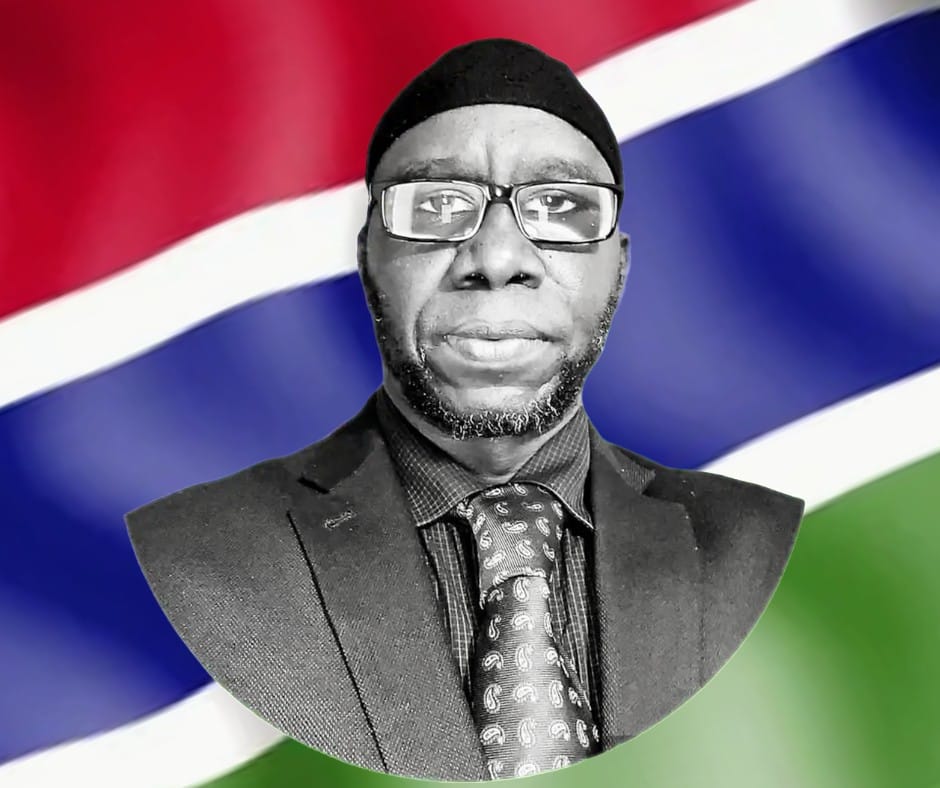

Yankuba Badjie, the former Director General of the National Intelligence Agency (NIA) Appeal has moved one step forward in the Court of Appeal. Counsel Christopher E. Mene and Pauline Bakuri had filed an Amended Notice of Appeal on behalf of Yankuba Badjie to overturn his murder conviction and death sentence in 2022 delivered by Justice Kumba Sillah-Camara following a five-year trial.
The Affidavit in Support of Motion, sworn by legal clerk Dawda Faye stated that the original appeal was filed by Yankuba Badjie himself on July 20, 2022, while he was in prison custody.
Upon taking over the case and perusing the ten-volume record of proceedings, Christopher Mene determined that it was necessary to substitute Yankuba Badjie’s handwritten arguments with more robust, professionally drafted.
The affidavit argues that granting these amendments is in the “overriding interest of justice”.
On the grounds of the Amended Appeal outlines 13 primary grounds where the defence argues the trial court failed to uphold the law or mismanaged evidence cite 6-52 of the record of proceedings.
1. Hearsay Allegations: The ground of appeal argues that the court relied on “mere hearsay” from a key prosecution witness (PW2) who did not actually witness the alleged acts.
2. Misuse of Co-Accused Statements: The appeal claims the court wrongly used the confessional and cautionary statements of co-accused persons (Exhibits I, VI, J, and XI) against Yankuba Badjie, even though he never adopted them and the individuals were not cross-examined.
3. Withdrawn Exhibits: The appeal alleges the court erroneously relied on a confessional statement (Exhibit XI) that the prosecution had previously withdrawn.
4. Conflict of Interest: It contends that the prosecution team was composed of lawyers from the United Democratic Party (UDP) the same party as the victims (Solo Sandeng) creating a fundamental unfairness that the trial judge dismissed.
5. Procedural Irregularities: The defence claims the prosecution “made up its case” by constantly introducing new witnesses throughout the trial.
6. Lack of Representation: The appeal highlights that at one point, Yankuba Badjie was forced to represent himself in a capital murder trial after his legal team withdrew, which they argue is inherently unfair.
7. Judicial Recusal: It alleges Justice Sillah-Camara manifested bias and wrongly refused to recuse herself even after several of her rulings were set aside by the Court of Appeal.
8. Legal Status and Official Immunity
The appeal further argues that the conviction is a “nullity” based on Yankuba Badjie’s official role at the time of the alleged crimes.
9. Official Capacity: Badjie maintains that as a staff member of the NIA, his actions were legally the acts of the agency itself.
10. Improper Procedure: It argues that the prosecution failed to follow the statutory procedures required for NIA personnel under the law.
11. The appeal suggests that Badjie was acting as a staff member of the NIA, and under Sections 16 and 17 of the NIA Act, the prosecution did not follow proper statutory procedures.
12. Vicarious Liability: The defence asserts that criminal liability cannot be inferred simply from his rank as Director General, stating there is “no vicarious liability in criminal law”.
The appeal concludes by asserting that the verdict was “unreasonable and perverse” and not supported by the evidence.
The defence is seeking a total reversal of the High Court’s judgment for the Court of Appeal to set aside the High Court’s judgment and acquit him on all counts, which include conspiracy to murder, forgery, and abduction.
Legal counsel Christopher E. Mene filed the motion on February 16, 2026, seeking leave to rely on the additional grounds to replace the original appeal filed by Badjie himself while in custody.
During the proceedings at the Court of Appeal, the defence counsel Mene filed an Affidavit in Support of Motion and an Amended Notice of Appeal. The State did not object to the amendment and the Appellate Court deemed the new grounds properly filed.