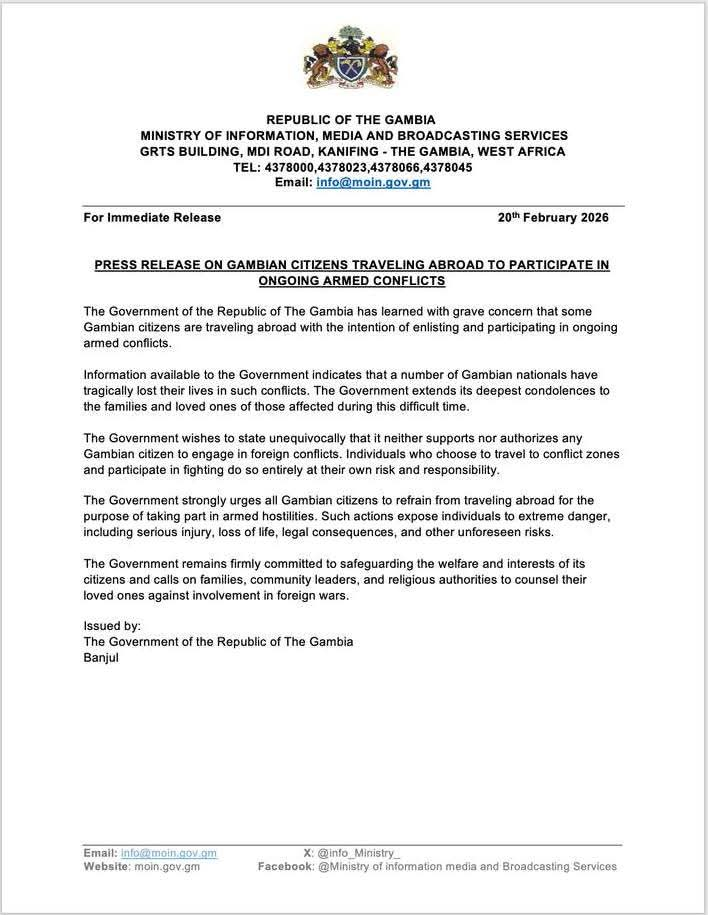
The recent press release issued by The Gambia’s Ministry of Information on citizens traveling abroad to fight in foreign wars is a welcome gesture, like noticing smoke and finally opening a window. It acknowledges a dangerous trend, but acknowledgment is not strategy. A statement that avoids naming the war, the recruiting state, and the security implications at home risks sounding more like moral advice than national policy.
This is not merely a humanitarian matter but a slow-burning African security crisis. African men are dying in the Russia–Ukraine war in disturbing numbers, and those who survive will not return as the same civilians who left. They will return seasoned by violence, trained in chaos, and potentially attractive to criminals or political manipulators at home. War does not issue return tickets to innocence.
Some African governments have acted individually. President Cyril Ramaphosa reportedly intervened directly with Vladimir Putin to secure the repatriation of South African nationals fighting in Ukraine. Kenya’s Foreign Minister, Musalia Mudavadi, also pursued a Kenyan solution after Kenyans were reported dead, captured, or still fighting. These steps show concern, but they also expose Africa’s old habit of facing global powers as scattered villages instead of as a continent. It is diplomacy by solo performance.
The Gambia government’s press release, by contrast, avoided naming the Russia–Ukraine war and framed the issue as a matter of personal recklessness. That may be politically convenient, but it is strategically risky. Yes, Africans have enlisted in foreign armies before, often as migrants chasing legal status or pay. But the present pattern is different. Africans are reportedly being recruited in haste, given short contracts, promised lump sums, and rushed straight to the deadliest corners of the battlefield. With monthly casualties in the tens of thousands, this is not ordinary military service but organized proximity to death.
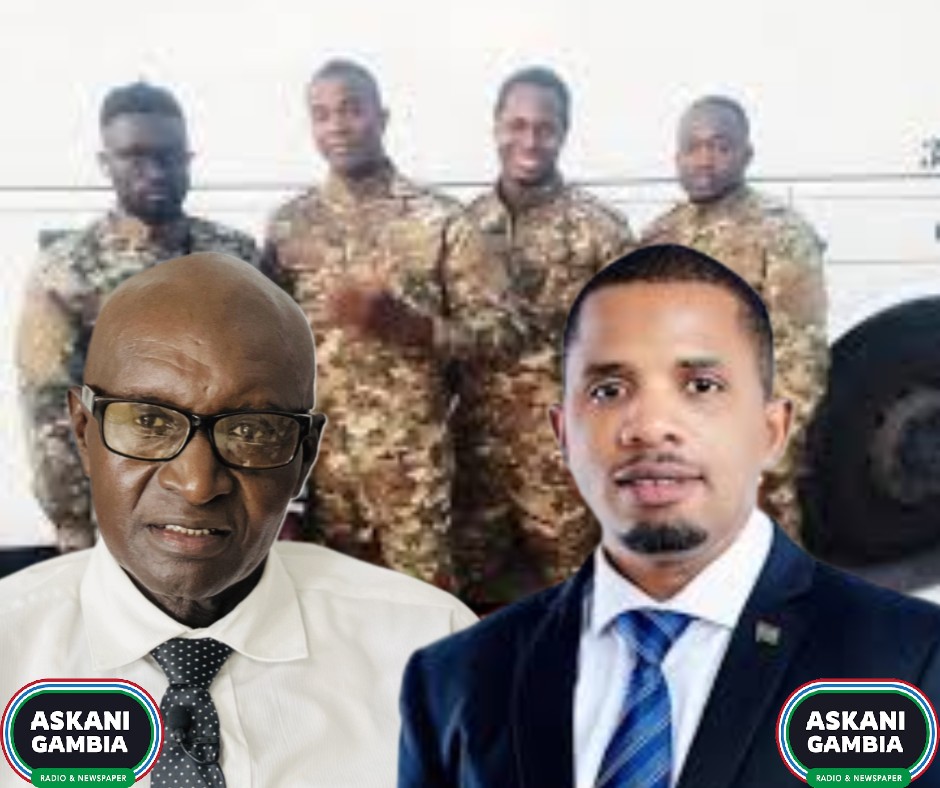
More troubling is who these recruits are. Reports suggest that former soldiers, including ex-members of the Gambia Armed Forces and State Guard personnel, are among them. As someone who spent 14 years in uniform, I know the soldier’s mind, and its blind spots. I also know the stubborn belief in “bulletproof” charms and mystical protection that lingers in many African armies. In an age of drones and precision-guided artillery, such beliefs are not harmless folklore, but dangerous illusions.
When I learned that out of 56 recently recruited Gambians, 26 had reportedly died, the question lingered is, were these men emboldened by such beliefs into reckless exposure? If so, this tragedy is not only geopolitical but cultural and psychological, stitched into a uniform.
What worries me even more is what happens after the war. States focus on the dead and forget the survivors. Yet history is a stern instructor. In 1996, battle-hardened Gambians who had fought for six years in Liberia, unknown to our security services, attacked Fajara Barracks and killed six soldiers in minutes while attempting to overthrow the government. They did not return as ordinary migrants but as insurgents.
That lesson alone should stir African governments from comfortable delay.
The first duty of any serious state is to know where its armed citizens are. The Gambian Ministry of Foreign Affairs must formally engage the Russian Foreign Ministry, using our embassy in Moscow, to obtain a full register of all Gambians serving in Russian forces or affiliated units, names, locations, and status. If Russia is recruiting our nationals openly, transparency should not be controversial. If it resists, then Africa must ask them what exactly is being concealed?
Second, African governments must abandon the illusion that bilateral diplomacy can solve a continental problem. No single African state can bargain meaningfully with a nuclear power in the middle of a war. This calls for a unified position through the African Union, coordinated demands, shared intelligence, and one clear message that African migrants must not be recruited through deception or economic coercion.
Third, this issue must be treated as national security, not merely consular inconvenience. Returning fighters must be identified, monitored, and reintegrated under clear frameworks. Ignoring them is an invitation to radicalization, criminality, or political violence.
Finally, African leaders must confront the root condition that feeds this pipeline, hopelessness. Young Africans are not choosing war because they love Moscow or hate Kyiv; they are choosing it because life at home feels like slow suffocation. When drowning in the Mediterranean no longer frightens them, dying in a foreign trench becomes just another wager.
This is why empty press releases are inadequate. This is why silence is perilous. And this is why Africa must speak to Russia with one voice, not 54 hesitant whispers.
The deaths of Gambians in Ukraine are not only Russian tragedies; they are African warnings. They reveal what happens when states outsource the value of their youth to foreign battlefields and then call it “choice.”
If African governments fail to engage Russia directly and collectively on this matter, they will not only be complicit in the deaths of their young men abroad but will be planting seeds of instability at home.
A nation that does not keep account of its sons at war should not be surprised when they return as strangers to peace.
By Lt. Colonel Samsudeen Sarr (Rtd)
Former Commander, The Gambia National Army