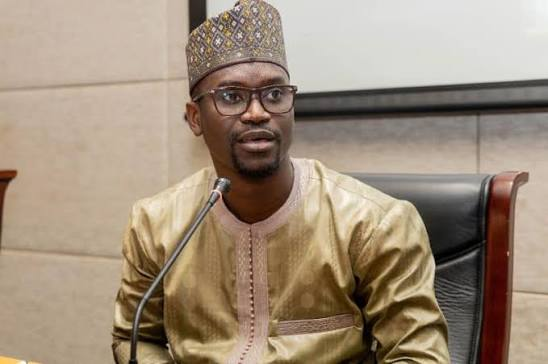
The growing dispute between Gambia Participates executive director Marr Nyang and leaders of the Golden Era Party (GEP) has opened a wider and potentially uncomfortable question: where does non-partisan civic activism end and partisan politics begin?
Nyang heads Gambia Participates, an organisation that publicly promotes good governance, democratic participation and civic engagement. Yet according to GEP leaders Saikou Sawo and Neneh Cheyassin Secka, the organisation’s executive director was simultaneously engaged by their political party as a campaign strategist.
The arrangement, they say, began shortly after the GEP was formed.
Sawo and Secka were introduced to Nyang while searching for a campaign manager. According to an email dated August 14, 2025, Nyang expressed interest in the job but objected to being called a campaign manager.
He preferred the title “political consultant.”
“I think it is best if I come as a political consultant,” Nyang reportedly wrote, arguing that the position was essentially the same as that of a campaign manager.
The parties eventually agreed on a monthly payment of D175,000, with Nyang beginning the assignment on August 19, 2025.
But rather than conducting the work directly through Gambia Participates, Nyang reportedly established Project & Results Consulting Company Limited, which was used to handle the GEP engagement.
That arrangement is now at the centre of the controversy.
The question is straightforward but important: Can the executive director of an organisation presenting itself as non-partisan simultaneously provide paid political consultancy services to a political party without creating a perception of conflict of interest?
The GEP leaders say Nyang’s responsibilities went beyond simply offering advice. They say he was also expected to assist the party in recruiting a media officer, community liaison officer and spokesperson, each reportedly carrying a monthly salary of D35,000.
But the relationship soon became strained.
According to Sawo and Secka, Nyang was reluctant to appear at public GEP events. They questioned why a political consultant receiving D175,000 a month would allegedly avoid being publicly associated with the party.
Sawo reportedly confronted him over the issue, questioning how the party could continue paying him while he remained absent from its political activities.
The relationship eventually collapsed.
The GEP terminated the arrangement on October 19. Nyang subsequently submitted an invoice covering the entire month of October, while the party leaders disputed the claim, arguing that he had worked only 19 days.
The disagreement reportedly escalated to Police Headquarters, where Nyang met Police Commissioner Habib Sanyang. The commissioner subsequently summoned Sawo.
Following discussions, the GEP reportedly agreed to pay Nyang an additional D65,000 for the remaining days of October.
The dispute might have remained a private contractual disagreement had the issue not resurfaced following a presidential election poll conducted by Gambia Participates ahead of the December 2026 election.
After the poll was released, Secka publicly criticised Nyang and questioned his credibility.
She then disclosed what had previously been a largely private aspect of Nyang’s professional activities: that he had worked for her and Sawo as a campaign manager, or political consultant.
That disclosure triggered a legal response.
On September 2, Nyang’s lawyer, Abdoulie Fatty, issued a pre-court notice to Sawo and Secka, demanding that they stop making statements about his client.
The lawyer reportedly relied on a non-disclosure agreement (NDA) allegedly signed between Nyang and the GEP, arguing that the parties had agreed to keep their dealings confidential.
Fatty also challenged several claims being made about his client, including the allegation that Nyang had been personally hired by the GEP as its campaign manager.
He warned that continued publication of what he described as false allegations, insinuations or innuendo could result in legal proceedings.
But instead of ending the controversy, the legal warning appears to have intensified the dispute.
Sawo and Secka continued speaking publicly and have begun producing documents which they say substantiate their version of events.
Among the documents being circulated are records purporting to show payments made to Nyang through Project & Results Consulting Company Limited.
And that is where the controversy moves beyond a simple disagreement between a political party and a former consultant.
It raises questions about transparency, political neutrality, accountability and public confidence.
If the documents are authentic, the public deserves to know the precise nature of the relationship between Nyang and the GEP, the scope of the services provided, the payments made and the terms under which the consultancy operated.
Equally important is the question of whether Gambia Participates had knowledge of the arrangement and, if so, whether its governing structures considered the engagement compatible with the organisation’s stated non-partisan position.
There is also the question of disclosure.
Should an executive director of a prominent civic organisation publicly disclose a paid consultancy with a political party, particularly when that organisation later conducts research or polling directly connected to the same political environment?
These questions do not, by themselves, establish wrongdoing. But they are legitimate questions in a democracy where organisations involved in civic education, governance and elections depend heavily on public trust.
The controversy now presents an uncomfortable test not only for Marr Nyang, but also for Gambia Participates.
The central issue is no longer simply who owes whom money.
It is whether the public can have confidence that organisations claiming to operate above partisan politics are, in practice, maintaining the independence and transparency they ask of politicians and political institutions.
As Sawo and Secka continue releasing documents and Nyang’s legal team threatens possible court action, the public may ultimately have to wait for the evidence—or the courts—to determine which version of the story stands.
Until then, one question remains hanging over the controversy:
Can a person serve as a paid political consultant while simultaneously occupying the top leadership position of an organisation whose credibility depends on being seen as politically neutral?