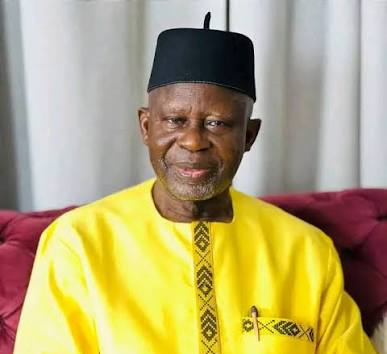
United Democratic Party (UDP) leader Ousainu Darboe has accused the ruling National People’s Party (NPP) of contributing to ethnic tensions in The Gambia, saying President Adama Barrow should have acted sooner to condemn remarks he considers divisive.
Speaking to West Coast Radio, Darboe argued that political leaders have a responsibility to bring Gambians together rather than exploit ethnic differences for electoral gain.
He criticised Barrow for what he described as a failure to respond promptly to statements attributed to government minister Hamat Bah and a National Assembly member. According to the opposition leader, the remarks risked portraying particular ethnic communities negatively and deepening divisions among citizens.
Darboe said the president should have publicly condemned the statements as soon as they emerged, rather than allowing the controversy to grow.
“They are trying to portray Mandinkas negatively in the eyes of other tribes,” he said. “Politicians should be like needles that stitch people together, not blades that divide them.”
Although Darboe acknowledged reports that Barrow had since spoken against ethnic rhetoric, he argued that the intervention came too late. He suggested the president acted only after religious leaders and other prominent Gambians had raised concerns publicly.
The UDP leader warned that inflammatory political language could damage relations between communities, but expressed confidence that voters would reject attempts to win support by appealing to ethnic loyalties.
Drawing on his own experiences, Darboe recalled friendships with Christians and people from different ethnic backgrounds during his school years and legal career. He said those relationships were built on a common national identity rather than differences in religion or ancestry.
He expressed concern that political competition was increasingly dividing the country along ethnic lines, insisting that no community could claim exclusive ownership of The Gambia.
“There is no Mandinka Gambia, no Wolof Gambia, no Fula Gambia and no Sarahule Gambia,” was the substance of his argument. The country, he maintained, belongs to all its people, regardless of their background.
Darboe also referred to an earlier meeting between Barrow and Mandinka elders in the Lower River Region, during which the president reportedly complained about losing votes in Mandinka communities. The UDP leader cited the episode as an example of what he sees as a tendency to interpret electoral support through an ethnic lens.
He called on politicians across party lines to demonstrate their commitment to national unity through their actions, arguing that public declarations against tribalism mean little if leaders continue to engage in conduct that divides citizens.
“So it is our duty, irrespective of where we come from, irrespective of our political affiliation, to preach, not only to preach but also to be seen to be doing what we are preaching, that we should not be polarizing this country,” he said.
Darboe also acknowledged that politicians across the political spectrum had contributed to the increasingly hostile tone of public debate. He said leaders often made divisive statements and apologised only after the damage had been done.
“And we, the politicians, are doing a great deal of polarizing in this country,” he said. “And we do them, and then we apologize after the damage has already been done.”
His comments come as political parties intensify their activities ahead of the December 5, 2026 presidential election. The debate over ethnic rhetoric has added to wider concerns about how political leaders can compete for votes without undermining national cohesion.
The allegations against the ruling party and the interpretation of the president’s earlier remarks reflect Darboe’s account of events. The government’s response to the specific claims was not included in the information available for this report.