In a dramatic turn of events that has gripped the nation, Ousainou Bojang and Amie Bojang have been released from custody following days of sustained public protests that swept across parts of The Gambia. Their release marks a significant moment in what has become one of the most controversial legal and political episodes in recent memory.
The siblings, who were rearrested shortly after being acquitted by the High Court earlier this week, had become the focal point of widespread public anger. Many citizens viewed their detention as a direct challenge to the authority of the judiciary and a violation of fundamental rights. What began as scattered demonstrations quickly evolved into coordinated protests, drawing participation from civil society groups, youth movements, and ordinary Gambians demanding justice.
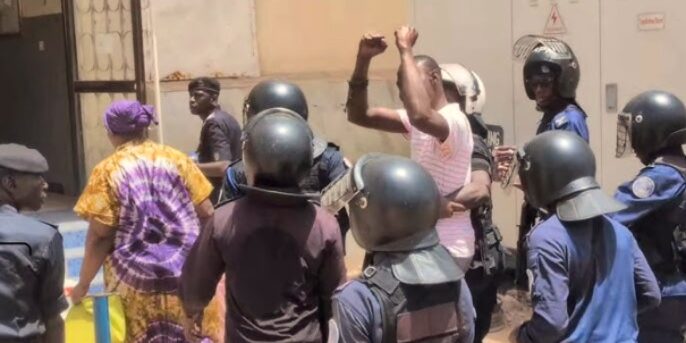
Crowds gathered in key areas of the capital, Banjul, as well as in surrounding communities, chanting slogans and calling for the immediate release of the Bojang siblings. Protesters carried placards emphasizing the importance of the rule of law and respect for court decisions. Some demonstrations remained peaceful, while others saw heightened tensions as security forces attempted to maintain order.
Observers noted that the scale and intensity of the protests were unusual, reflecting a broader frustration with governance and accountability. For many, the Bojang case symbolized deeper concerns about the balance of power between state institutions and the judiciary. “This was not just about two individuals,” said one protest organizer. “It was about defending the integrity of our legal system.”
Under mounting pressure, authorities announced the release of Ousainou and Amie Bojang late বৃহস্পতিবার evening. While the government has not fully detailed the circumstances leading to the decision, insiders suggest that the sustained public outcry played a decisive role. The release was met with scenes of celebration, as supporters gathered to welcome the siblings back to their community.
Family members expressed relief and gratitude, while also acknowledging the emotional toll of the ordeal. In a brief statement, a relative thanked the Gambian people for their solidarity and support, describing the outcome as “a victory for justice and unity.” Legal representatives for the Bojangs also welcomed the development but indicated that questions remain regarding the legality of the initial rearrest.
The episode has placed renewed scrutiny on the leadership of Adama Barrow and the conduct of law enforcement agencies. Critics argue that the situation could have been avoided if proper respect had been given to the High Court’s acquittal. Calls for accountability, including demands for an independent investigation into the rearrest, are likely to intensify in the coming days.
Political analysts suggest that the government’s decision to release the Bojangs may signal an attempt to defuse tensions and restore public confidence. However, they caution that deeper institutional issues remain unresolved. “Releasing them is only the first step,” said one analyst. “The real challenge is ensuring that such incidents do not happen again.”
The protests themselves have been widely interpreted as a demonstration of growing civic engagement in The Gambia. Since the country’s transition from authoritarian rule, citizens have increasingly used public demonstrations as a means of expressing dissent and influencing policy. The Bojang case appears to have galvanized this trend, highlighting the power of collective action.
At the same time, concerns persist بشأن the handling of the protests by security forces. Reports of isolated confrontations and arrests during the demonstrations have prompted calls for restraint and adherence to human rights standards. Civil society organizations have urged the government to ensure that the right to peaceful assembly is protected.
As the country moves forward, attention is likely to shift toward accountability and reform. Legal experts are calling for clearer safeguards to prevent the rearrest of acquitted individuals without compelling new evidence. There are also growing demands for greater transparency within the police force and the justice system as a whole.
For now, the release of Ousainou and Amie Bojang stands as a powerful reminder of the role public pressure can play in shaping outcomes. It has also underscored the importance of vigilance in protecting democratic institutions.
Whether this moment leads to lasting change remains to be seen. But for many Gambians, the message is clear: when justice is perceived to be under threat, the voice of the people can become a force too strong to ignore.
Written Salieu Njie