President Adama Barrow has publicly rejected a recent court ruling that acquitted Ousainou Bojang of charges related to the killing of officers from the Police Intervention Unit, escalating tensions between the executive and judiciary.
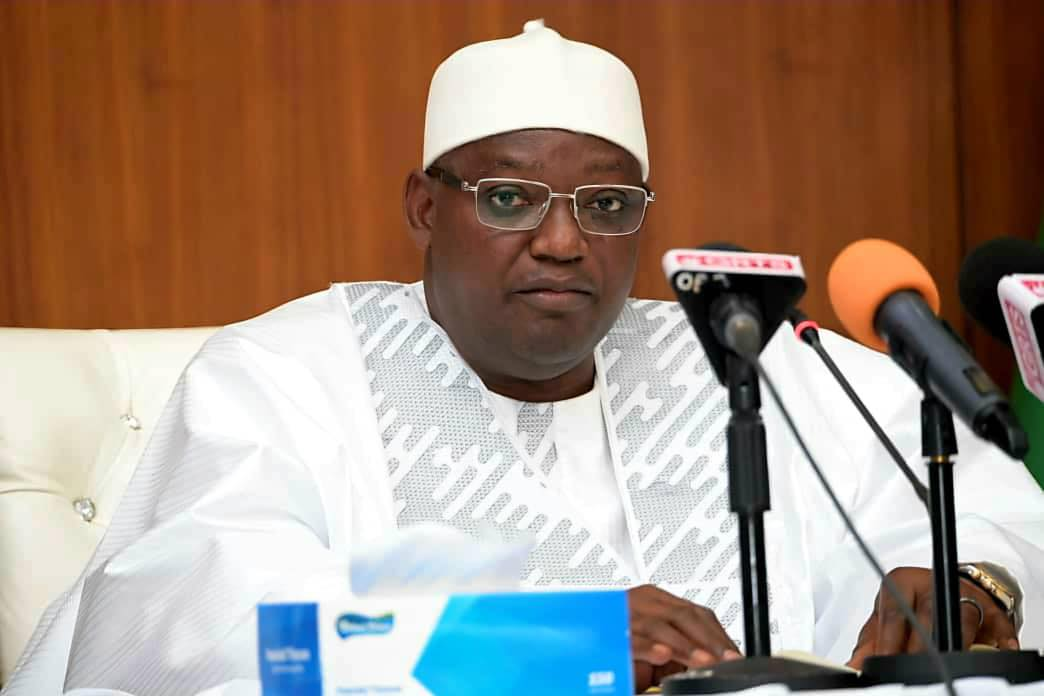
Speaking at a community meeting in Somita, President Barrow expressed strong disagreement with the decision handed down by Justice Jaiteh, who cleared Bojang and his sister of all charges related to the fatal shooting. The President’s remarks mark one of the most direct criticisms of a judicial ruling by his administration in recent years.
“We suspected he killed the officers, and we believe he is the one who killed them,” Barrow told attendees, reiterating the government’s firm stance despite the acquittal. His comments signal a deep divide between the conclusions reached by the court and the position maintained by the executive branch.
The case has drawn widespread public attention across The Gambia, where the killing of PIU officers is considered a serious attack on national security forces. The trial had been closely followed, with many awaiting the court’s determination as a test of the country’s justice system.
Justice Jaiteh’s ruling, which found insufficient evidence to convict Bojang and his sister, was seen by legal observers as a reflection of the principle that guilt must be proven beyond reasonable doubt. However, the President’s response suggests that the government remains unconvinced by the court’s assessment of the evidence presented during the trial.
Barrow confirmed that the state will pursue an appeal, indicating that the legal process is far from over. “We will challenge the ruling at a higher court,” he said, underscoring his administration’s commitment to seeking what it views as justice for the PIU officers.
Legal experts note that while the government has the right to appeal, public statements rejecting judicial decisions can raise concerns about the separation of powers. Some analysts warn that such remarks may be perceived as undermining confidence in the judiciary, while others argue that the appeal process itself is a legitimate avenue for addressing disagreements with court outcomes.
The families of the slain officers have yet to publicly respond to the President’s latest comments, but the case continues to resonate emotionally with many citizens. For supporters of the acquittal, the court’s decision represents a victory for due process. For others, including the government, it leaves unresolved questions about accountability.
As preparations for the appeal move forward, attention will shift to the higher courts, where the case is expected to be re-examined. The outcome could have significant implications not only for Bojang and his family but also for public trust in the justice system.
For now, the President’s remarks ensure that the القضية remains firmly in the national spotlight, highlighting the ongoing tension between legal judgments and political conviction in The Gambia.