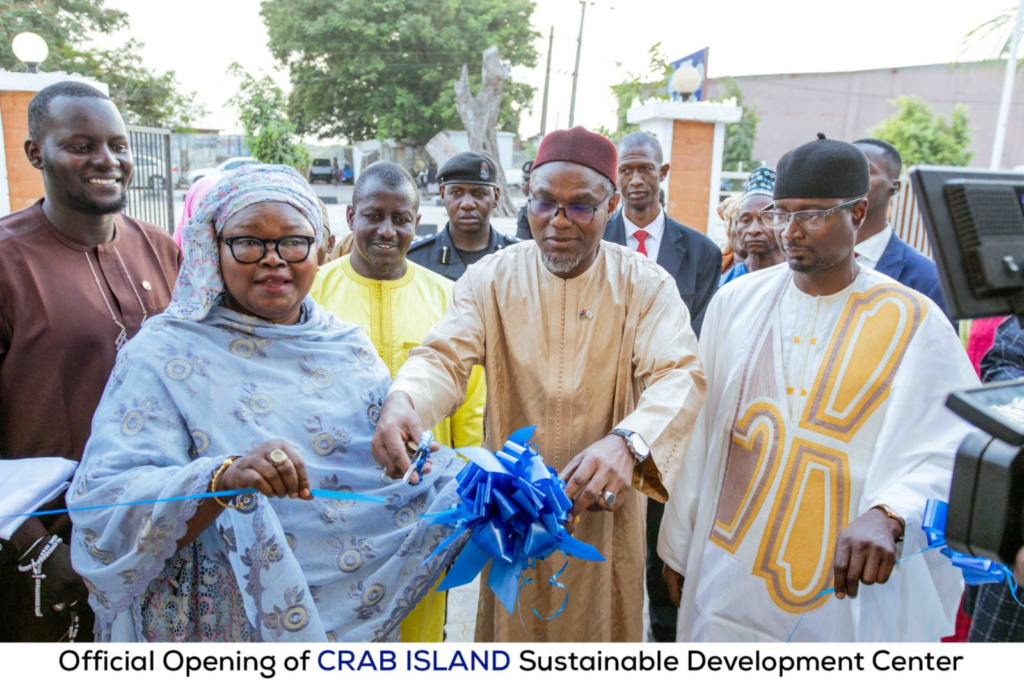
The Banjul City Council has officially inaugurated the Crab Island Sustainable Development Centre (CISDC), marking a major milestone in the city’s drive toward innovation, sustainability, and community development.
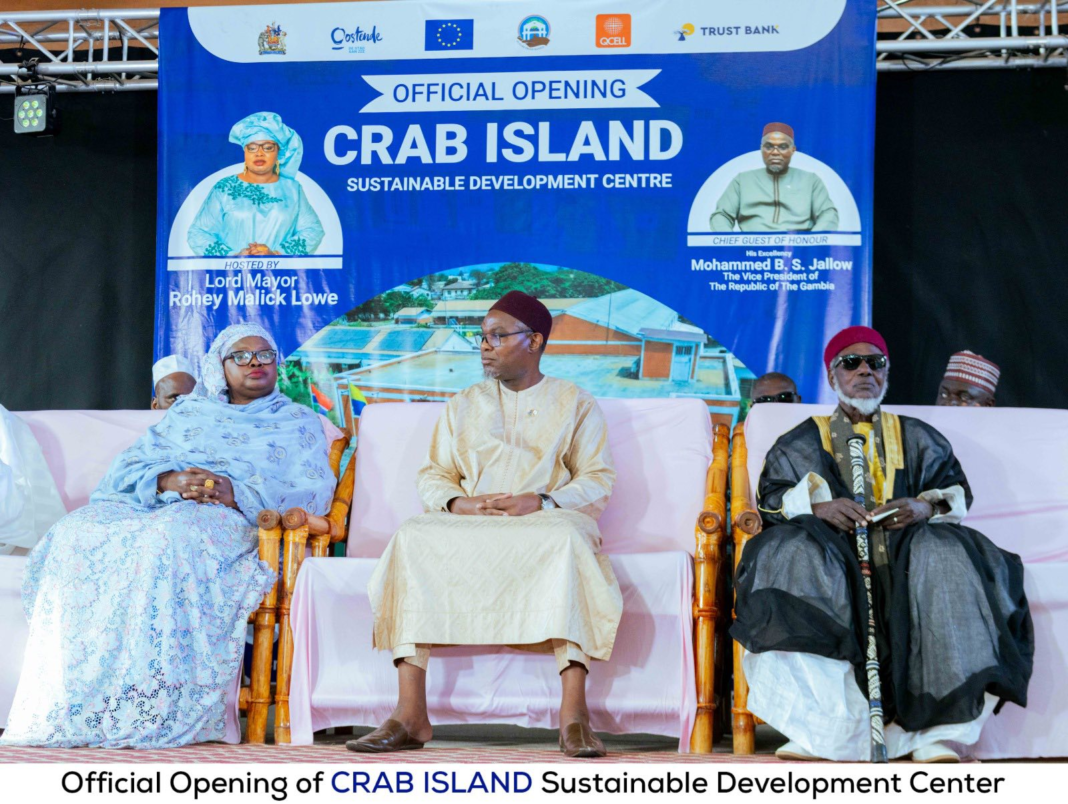
The inauguration ceremony was attended by the Vice President of The Gambia, Muhammed B. S. Jallow, who served as Chief Guest of Honour. The event was hosted by the Lord Mayor of Banjul, Rohey Malick Lowe, whose leadership played a key role in the realization of the project.
The occasion attracted a wide range of dignitaries, including government officials, development partners, corporate representatives, religious leaders, and community members, highlighting the national importance of the project.
Among those present were the Imam Ratib of Banjul, the Deputy Speaker of the National Assembly, the Minister of Tourism and Culture, Members of Parliament for Banjul North and Banjul Central, the Chairman of Mansakonko Area Council, and the Chief Executive Officer of Kerewan Area Council, alongside other senior government and local government officials.
Senior officials of the Banjul City Council also participated in the ceremony, including Deputy Mayor Hon. Abdou Aziz Dabakh Gaye, Chief Executive Officer Modou Jonga, Administrative Manager Sandigie Njie, and councillors representing various wards in the capital.
Corporate partners were also represented at the event. Among them were Muhammed Jah, Chief Executive Officer of QCell, and Njillan Senghore, Managing Director of Trust Bank Ltd, who attended with members of their management teams. Their support contributed significantly to the successful organization of the event.
The CISDC was developed through the City Link partnership between Banjul and Ostend and funded by the European Union. The project represents a major investment in sustainable urban development and community empowerment in the capital.
The centre has been transformed into a multi-purpose cultural and development hub equipped with facilities including a community radio station, professional music recording studio, IT training laboratory, innovation and co-working spaces, arts and cultural areas, an 800-seat multipurpose hall, gardens, a laundry facility, and a restaurant and community event space.
In line with Banjul’s environmental goals, the entire complex is powered by a 60-kilowatt solar energy system with battery backup, reflecting the city’s commitment to renewable energy and climate-resilient urban development.
The project forms part of the European Union-funded City Link Programme, which focuses on five key areas: waste management, good governance, greening, health, and the Crab Island initiative, all aimed at strengthening sustainability and improving community well-being.
The inauguration also featured the first Religious Conference organized by the Banjul City Council, as well as the first Banjul City Iftar (Ndogu Banjul) held during the holy month of Ramadan. The gathering brought together religious leaders, Dara students, elders, national leaders, and members of the public in a moment of unity and reflection.
Special recognition was given to the Council’s Religious Committee, led by Senior Councillor Hon. Pa Mamud Ceesay, for its role in organizing this aspect of the event. The council also acknowledged the contributions of respected elders and religious leaders who supported the initiative, including Uncle Mbye Gaye, Imam Foday Kabba Dumbuya, Imam Bai Essa Ngum, and Dodou Janko.
The Banjul City Council expressed appreciation to the many individuals, contractors, technical teams, community members, and partner institutions whose efforts made the project possible. The transformation of the former Crab Island school site into the new development centre reflects the impact of strong partnerships and a shared commitment to the city’s progress.
Officials say the opening of the Crab Island Sustainable Development Centre represents more than just a new facility; it signals a new chapter for Banjul—one focused on empowering youth, fostering creativity, protecting the environment, and expanding opportunities for the community.
With the centre now operational, Banjul moves a step closer to becoming a hub for innovation and sustainable development in The Gambia and across the West African region.