The rapidly escalating war involving the United States, Israel, and Iran has become one of the most alarming geopolitical crises of our time. What began as coordinated military strikes by the United States and Israel on Iranian targets has now spiraled into a wider regional confrontation with profound consequences for global stability, energy markets, and civilian populations across the Middle East.
The conflict erupted on 28 February 2026, when the United States and Israel launched joint attacks on military and strategic targets inside Iran. The strikes, aimed at weakening Iran’s military capacity and leadership structure, were part of a broader campaign following years of tensions over Iran’s nuclear ambitions, missile program, and regional influence.
In the early phase of the operation, several senior Iranian officials were reportedly killed, including Iran’s Supreme Leader Ali Khamenei, whose death dramatically intensified the conflict and destabilized Iran’s political leadership.
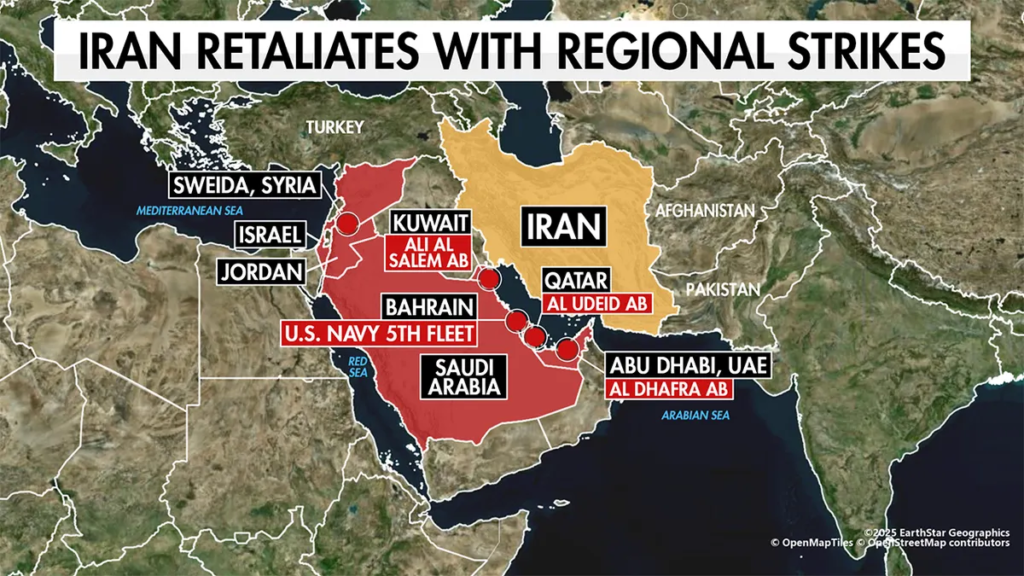
Iran responded with force. Ballistic missiles and drones were launched toward Israel and U.S. military bases across the Gulf region. Some attacks also targeted neighboring countries hosting American forces. The rapid expansion of the conflict shows how fragile the security environment in the Middle East has become.
The human cost is already severe. Reports indicate that more than 1,200 people have been killed in Iran, while casualties have also been recorded in Lebanon and Israel. Civilians have suffered alongside soldiers, with residential areas, infrastructure, and even schools caught in the crossfire.
For many observers, the most troubling aspect of this war is the possibility of a wider regional escalation. Iran-backed groups such as Hezbollah have already opened another front from Lebanon, prompting Israeli retaliatory strikes in Beirut and southern Lebanon. If other actors are drawn into the conflict, the Middle East could face a prolonged and devastating war.
Beyond the region, the effects are being felt across the world. Oil markets have been shaken by threats to shipping routes in the Persian Gulf, particularly the strategic Strait of Hormuz, through which a large portion of global energy supplies passes. Disruptions to these routes could trigger rising fuel prices and economic uncertainty worldwide, including in developing nations like The Gambia that depend heavily on imported fuel.
Equally concerning is the political rhetoric surrounding the war. Statements from world leaders about regime change and the future leadership of Iran suggest that military objectives may extend far beyond immediate security concerns. Such ambitions risk deepening the conflict and making diplomatic resolution more difficult.
History offers many lessons about wars in the Middle East. Military victories rarely produce lasting peace if they are not followed by meaningful political dialogue. Without diplomacy, grievances persist, alliances shift, and conflicts resurface in new and more dangerous forms.
For the international community—including African nations—the priority should be clear: de-escalation and diplomacy. The United Nations and major global powers must urgently push for negotiations to prevent the conflict from expanding further.
The war between the United States, Israel, and Iran is not just a regional dispute; it is a global crisis with the potential to reshape international politics. At a time when the world faces economic uncertainty, climate challenges, and humanitarian crises, the last thing humanity needs is another prolonged war.
Peace may seem distant today, but it remains the only sustainable path forward.