
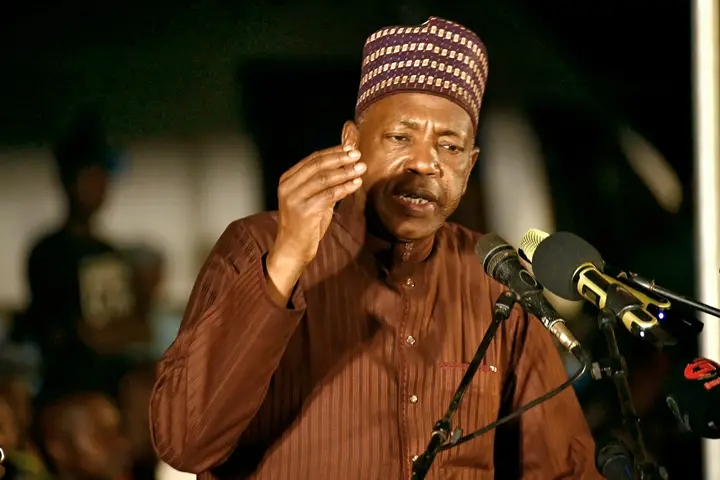
Land disputes have emerged as one of the biggest burdens on The Gambia’s judicial system, accounting for about 62 percent of cases before the courts, according to Lands Minister Hamat N.K. Bah.
Speaking on GRTS Radio, Mr. Bah, who oversees the Ministry of Lands, Regional Government and Religious Affairs, said the sheer volume of land-related cases is consuming valuable judicial time and resources that could otherwise be used to address other legal matters.
The growing problem has prompted the government to move towards establishing a specialised land court at the High Court level. According to Mr. Bah, preparations for the court are already underway, with a committee having been established by the retired Chief Justice.
“This should start soon,” Mr. Bah said, indicating that the proposed court could provide a dedicated avenue for resolving the country’s increasingly complex land disputes.
The minister warned that land conflicts should not be viewed merely as property disagreements, arguing that unresolved disputes could pose a broader threat to social stability. With The Gambia being one of the smallest countries on mainland Africa and facing increasing pressure over land, competition for property has become a growing concern.
Mr. Bah said addressing land-related conflicts was among his priorities when he assumed responsibility for the ministry. One of the government’s key responses has been the development of a comprehensive national land policy designed to introduce clearer rules governing the allocation, administration and use of land.
The policy, developed with World Bank assistance, came into effect on January 1, 2026. Mr. Bah described it as the first comprehensive national land policy adopted by The Gambia since independence.
Alongside the policy, the government is working on a national Land Information System intended to transform the way land records are maintained. The proposed digital system would create electronic records of land ownership and holdings, potentially helping to tackle multiple allocations, competing claims and fraudulent property transactions.
Mr. Bah said consultants supported by the World Bank are currently working on the system, with a draft expected by the end of September. The government is also undertaking the digitisation of existing land archives.
Another major component of the reforms is the expansion of formal land titling, including for privately owned residential properties. The objective, according to the minister, is to give property owners stronger and clearer documentary evidence of ownership.
A pilot titling programme has already begun in the West Coast Region, which the government considers the area with the highest concentration of land disputes in the country.
The reforms come against a backdrop of longstanding complaints involving the multiple sale of properties, overlapping land allocations, inadequate documentation and allegations of abuse of influence in land transactions.
For years, such problems have created uncertainty for buyers and property owners while contributing to a steady stream of cases before the courts.
Mr. Bah said the government ultimately wants to replace the fragmented land administration system with one based on reliable records, clearer ownership and greater transparency.
If successfully implemented, the new land policy, digital registration system and expanded titling programme could make it considerably harder for individuals to sell the same property to multiple buyers, manipulate records or exploit positions of influence to take control of land belonging to others.
For the government, therefore, land reform is about more than improving property administration. It is also an attempt to tackle disputes at their source, reduce the number of land cases reaching the courts and prevent conflicts over increasingly valuable land from developing into a wider threat to social peace and stability.