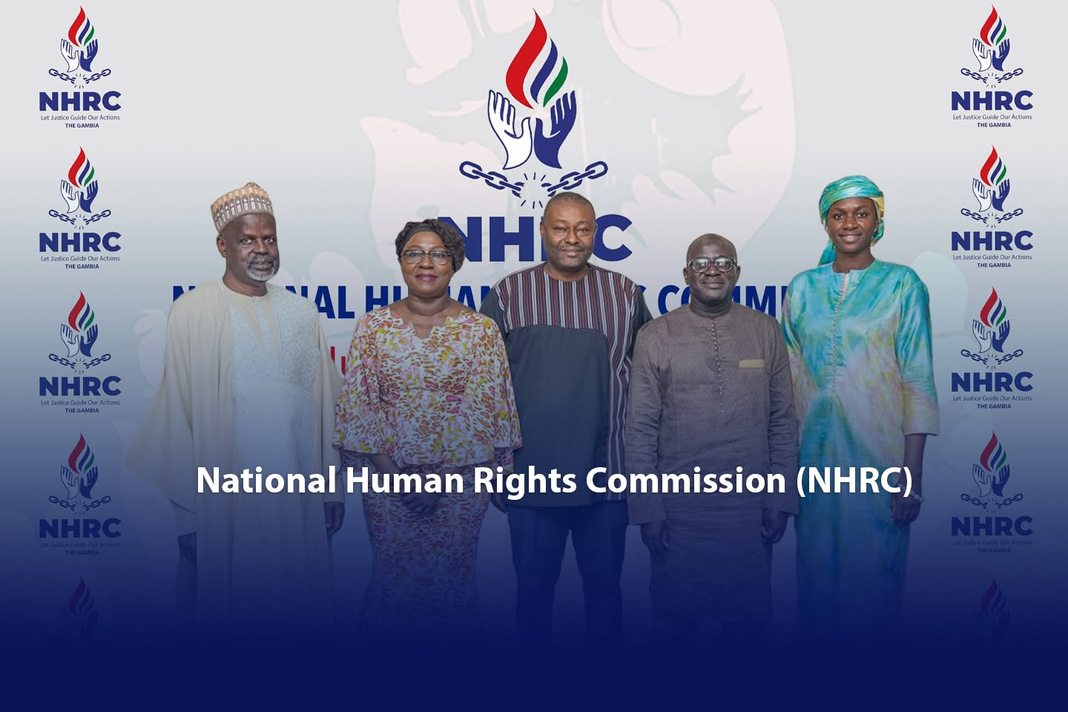
The National Human Rights Commission (NHRC) has confirmed that it is investigating complaints concerning statements attributed to Commissioner Imam Baba Leigh, amid growing public calls for his removal.
In a public statement, NHRC Chairperson Emmanuel Daniel Joof said the Commission had received a number of formal complaints and had referred the matter to its Directorate of Legal and Investigation (DLI).
The Directorate is examining the statements, the circumstances in which they were made and their wider context. It is also expected to engage Leigh and other relevant individuals before submitting its findings, legal opinion and recommendations to the Commission.
Joof said the NHRC had deliberately refrained from making a substantive judgment on the controversy while the investigation was ongoing.
“The Commission believes that it would be inappropriate to prejudge the matter,” he said, stressing that complaints had been formally lodged and that an investigative process was underway.
The controversy follows remarks attributed to Leigh that sparked public criticism and calls for his removal. The NHRC said Leigh was on annual leave when the statements were made and was not acting in an official capacity or speaking on behalf of the Commission.
According to Joof, Leigh subsequently issued a public explanation and later apologized in the local language to the Mandinka community and others who felt offended by his comments.
The NHRC said those developments would be considered as part of the investigation, but stopped short of determining whether the explanation or apology was sufficient.
Joof also addressed demands for Leigh’s immediate removal, saying such a decision could not be made solely by the NHRC chairperson or in response to public pressure.
He said the appointment, tenure and removal of commissioners are governed by the NHRC Act and other applicable laws, meaning any decision to remove a commissioner must follow the legally prescribed procedure.
“This should not be understood as the Commission seeking to shield any individual from accountability,” Joof said. “The best protection against impunity is a fair, independent and lawful process that establishes the facts.”
The statement comes as the controversy has raised broader concerns about tribalism, hate speech, discrimination and religious intolerance in The Gambia.
Joof reaffirmed the NHRC’s stated zero-tolerance position on such conduct, regardless of who makes the statements or which community is affected.
He noted that the Commission has previously conducted and published research on hate speech and engaged political parties and other stakeholders on the dangers of divisive rhetoric.
The NHRC chairperson also appealed to members of the public to allow the investigation to proceed, arguing that the absence of an immediate public verdict should not be interpreted as inaction.
“Investigating a complaint, establishing the facts and following due process are themselves essential parts of the pursuit of accountability and justice,” he said.
The Commission has not indicated when the investigation is expected to be completed. It has also not disclosed the number or specific details of the complaints received.
The outcome of the DLI investigation is therefore expected to determine whether the remarks breached any applicable law or standards and whether further action against Leigh is warranted.
Joof said the NHRC would consider the investigation’s findings and recommendations and take whatever action falls within its legal mandate.
The controversy has placed the Commission under scrutiny as it seeks to demonstrate that its commitment to combating tribalism and discrimination applies equally to its own commissioners and to members of the wider public.