
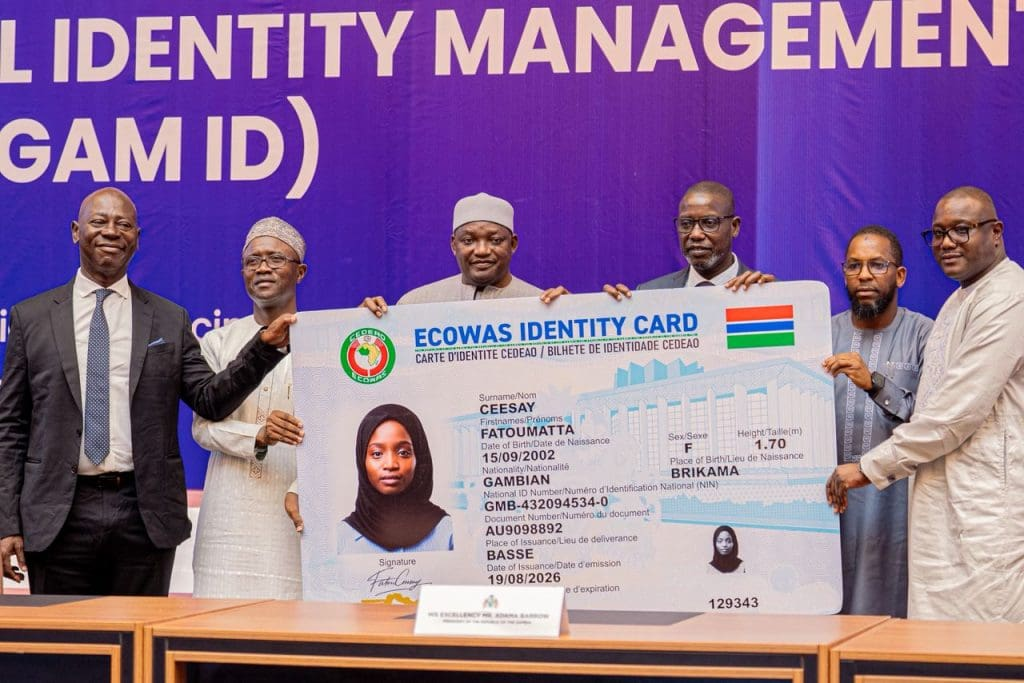
The Gambia’s new national identification system could mark a major shift in how citizens prove their identity and access services, according to Kwesi Atta-Panyin Baiden, deputy chief executive of Margins Group.
Baiden, speaking on QTV’s State of Affairs programme, described the initiative as a “digital revolution,” saying the technology behind the new card is designed to provide a more secure and integrated form of identification than previous national ID documents.
He said the system being introduced in The Gambia would benefit from lessons learned through a similar identification project in Ghana, where the technology has been in use since 2012.
“The system that is going to be rolled out in The Gambia is going to factor in all these years’ lessons learned,” Baiden said. “It is going to incorporate the best of technology.”
According to Baiden, the experience gained from Ghana’s implementation has given Margins Group a better understanding of the technical and operational challenges associated with large-scale digital identity programmes. He said that experience would allow the Gambian system to adopt improved technology from the outset.
Baiden said Margins Group secured the contract after a competitive bidding exercise involving 14 companies. He attributed the company’s successful bid partly to its long-standing experience in developing and managing identity systems.
Although the company will provide the initial technical infrastructure and expertise, Baiden said the long-term management of the system would be entrusted to Gambians.
He said personnel from the Gambia Immigration Department would be trained to operate and maintain the system independently once the infrastructure and necessary technical arrangements are fully established.
The new identification card, Baiden explained, will go beyond the functions of earlier national ID cards. It will be capable of securely storing biometric details and other personal identity information.
He likened the card to a “mini computer” because of the amount and type of information it can securely hold.
The card will also contain a passport profile in addition to the holder’s national identity information, effectively bringing several identity-related functions together in one document.
Baiden said the technology could have wider implications for both government institutions and private businesses by making identity verification faster, more secure and more reliable.
A modern digital identification system, he argued, could make it easier for citizens to access services while allowing institutions to confirm identities more efficiently.
He described the initiative as a potential “life changer,” saying its ability to combine national identity, biometric and travel-related information in a single secure system could substantially change how identification is used in The Gambia.
If fully implemented as planned, the new system would represent a significant move away from conventional identification documents toward a more technologically advanced national identity infrastructure.