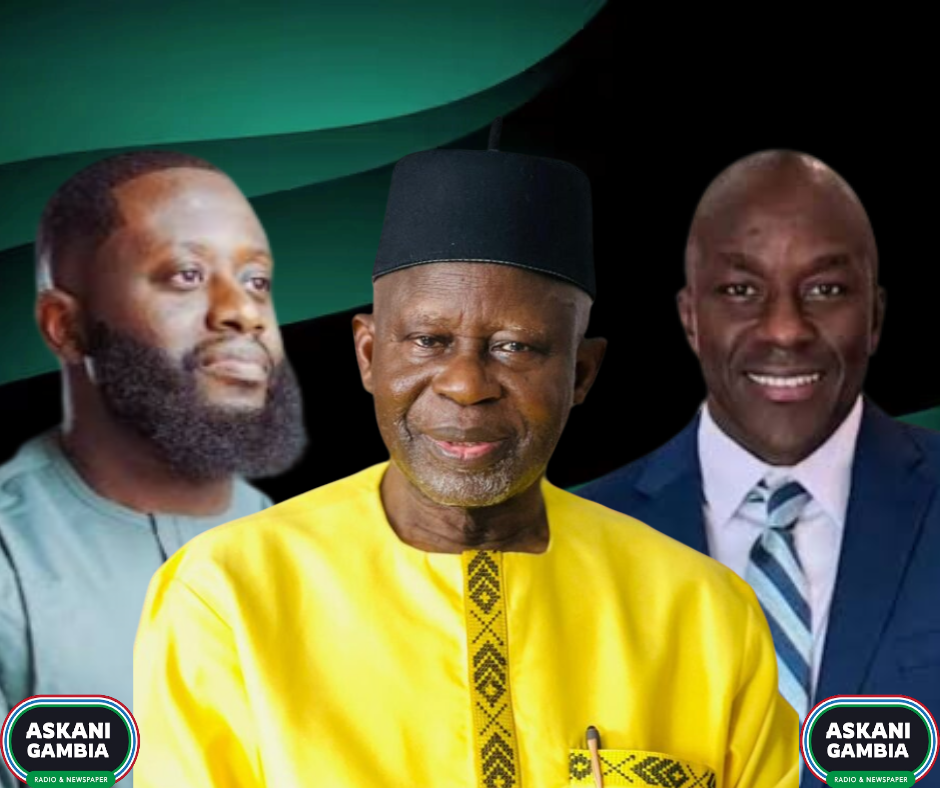
The Golden Era Party, led by Saikou Sawo, has formally ended its political partnership with the People’s Progressive Party, three months after the PPP selected him as its flagbearer.
Sawo announced the withdrawal in a letter addressed to the PPP chairman, citing a loss of confidence in the party’s handling of a proposed political alliance with the United Democratic Party.
He thanked the PPP leadership, members and supporters for the opportunity to work together but said the Golden Era Party could no longer continue with the arrangement because of what he described as hypocrisy, internal contradictions and conflicting positions surrounding the proposed coalition.
“After careful reflection, however, I regret to inform you that the Golden Era Party is officially withdrawing from the People’s Progressive Party with immediate effect,” Sawo wrote.
The decision followed weeks of disagreement within the PPP after Sawo publicly stated that the party was prepared to enter a UDP-led coalition.
According to Sawo, the PPP leadership had established a Central Coalition Committee, comprising himself and other senior party officials, to negotiate the proposed alliance. He maintained that the negotiations were conducted with the knowledge and approval of the party’s leadership.
Sawo further claimed that a draft alliance agreement was prepared by the PPP’s Policy Director and that the discussions were conducted in good faith under the authority granted to the negotiating team.
He also defended his participation in a recent opposition press conference concerning the supplementary voter registration exercise.
At the press conference, political parties raised concerns about the reported omission of thousands of eligible voters from registration records.
Sawo said his attendance was unrelated to the proposed PPP-UDP alliance and was motivated by concerns about the integrity of the country’s electoral process.
“The omission of thousands of eligible voters is a matter that affects the integrity of our democracy and should concern every patriotic Gambian, irrespective of political affiliation,” he stated.
He argued that delays, internal disagreements and conflicting messages within the PPP had weakened confidence in the party’s ability to provide decisive political leadership.
“The Gambia cannot be transformed through a ‘business as usual’ approach,” Sawo said, adding that effective leadership required unity, respect for commitments and the ability to manage internal differences without creating unnecessary confusion.
PPP Responds
The PPP subsequently issued a statement acknowledging Sawo’s decision to revive the Golden Era Party and end his association with the PPP.
The party said it respected the democratic right of individuals and political organisations to determine their political future and thanked Sawo for his service.
However, the PPP disputed aspects of Sawo’s account and said it was necessary to clarify the circumstances surrounding the proposed alliance and his departure.
According to the party, negotiations with the UDP were conducted in good faith by a properly constituted Coalition Negotiation Committee established by the PPP leadership.
Although a draft agreement was produced, the PPP said the document remained subject to approval by the party’s constitutional bodies.
Under the PPP Constitution, the party said, no alliance agreement becomes binding until it is considered and approved by the relevant organs and formally signed by the Secretary General and Party Leader.
The PPP maintained that it had not adopted a final position on the proposed alliance and said any public statement suggesting otherwise did not represent the party’s official position.
Dispute Over Authorisation
The PPP said its disagreement with Sawo was not related to the subject of the UDP press conference or the campaign for transparent and credible elections.
“The issue was one of authorisation,” the party stated.
It alleged that Sawo had repeatedly associated the PPP with the UDP through public appearances and statements without informing or obtaining approval from the party leadership.
According to the statement, PPP officials sometimes became aware of his activities only after they had taken place.
The party said Sawo’s participation in the UDP press conference in his capacity as PPP flagbearer had not been communicated to or authorised by the leadership.
It argued that, as the party’s presidential candidate, Sawo was representing the PPP in an official capacity and was therefore required to follow established procedures before speaking or appearing on behalf of the party.
The PPP also said earlier public statements attributed to Sawo regarding the proposed coalition were made without the knowledge or approval of the leadership.
The party maintained that official positions on coalition negotiations and other major political matters could only be communicated by the Secretary General and Party Leader or by an expressly authorised representative.
“No office bearer, regardless of position, has the constitutional authority to unilaterally commit, represent or imply the party’s official position on matters that remain under consideration by the party’s constitutional organs,” the statement said.
Trustees Defend Intervention
The PPP also defended the intervention of its Board of Trustees, saying the body had a constitutional responsibility to protect the party’s unity, discipline and institutional integrity.
The Board reportedly issued an advisory letter reminding Sawo of the obligations attached to his position as flagbearer and cautioning him against making unauthorised public representations on behalf of the party.
The party said the letter was intended to preserve institutional order and ensure that official positions were communicated through recognised channels.
It rejected suggestions that the intervention represented opposition to political cooperation, electoral reform or engagement with other opposition parties.
The PPP further dismissed claims that adherence to constitutional procedures amounted to obstruction or dysfunction.
“Strong democratic institutions are built on consultation, accountability and respect for established rules,” the party said.
It added that no official, regardless of rank, was above the party’s constitution.
“Our commitment to constitutional governance, collective leadership and institutional discipline is not a weakness. It is the foundation upon which responsible national leadership is built,” the statement concluded.
The clarification was signed by Kebba Nanko, the PPP’s Director of Policy, Implementation, Media and Communications.