
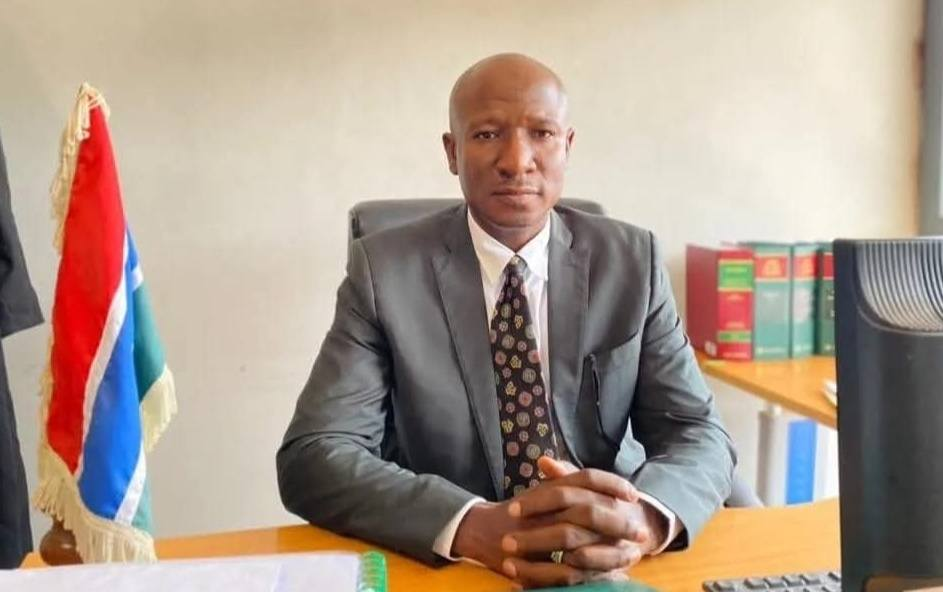
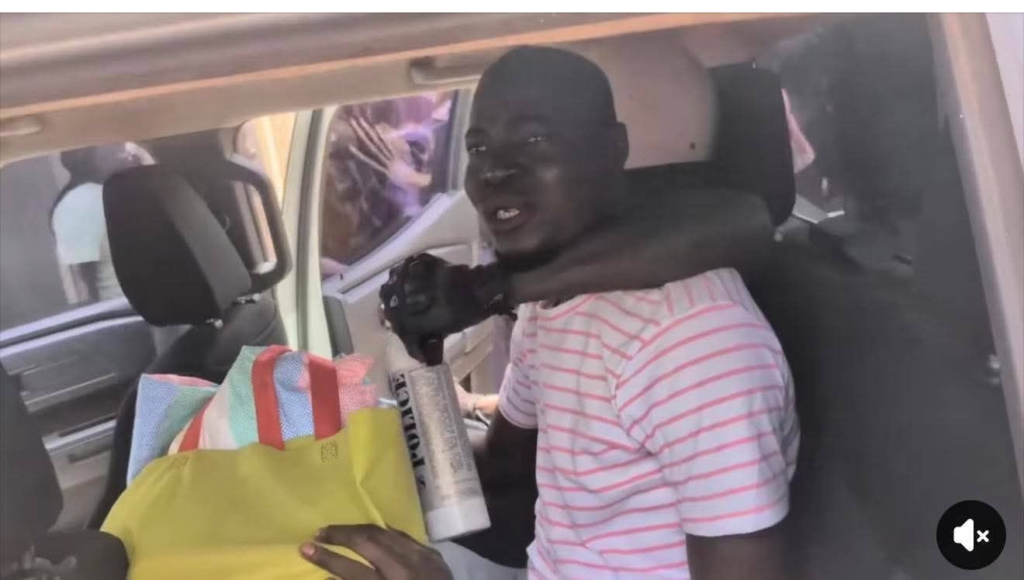
The Office of the Ministry of Justice has filed an appeal to overturn the acquittal of Ousainou and Amie Bojang, by filing a Notice of Appeal that labels the trial judge Justice Jaiteh’s decision as “unreasonable” and “erroneous”.
The appeal, filed by Director of Public Prosecutions A.M. Yusuf today 31 March, 2026, seeks to set aside the High Court’s judgment and replace it with convictions and sentences “commensurable with the gravity of the offences”.
The Appellant (The State) has outlined seven grounds of appeal, arguing that Justice Ebrima Jaiteh made several errors in law and fact.
On ground 1, the State argues the judge (Justice Jaiteh) erred by diminishing the weight of Ousainou’s extra-judicial statements (Exhibit P6) due to a lack of corroboration. The state maintained that the confessions followed due process and were corroborated and a properly proved confession is sufficient to sustain a conviction even if later retracted by the maker.
Ground 2: State claims the judge shifted the burden of proof to the prosecution to disprove an alibi they call an “afterthought” raised only during the trial stage. State argue WhatsApp messages (Exhibit D38) do not conclusively prove physical geographical location and the judge failed to caution himself against relying on “family members or close friends” (DW3, DW4, and DW12) who have an obvious interest in the case.
Ground 3, State contends the judge focused too narrowly on visual identification (the Turnbull principles) instead of the “compelling circumstantial web”. which led officers to Ousainou’s residence to recover a haftan and pointing out the location of the murder weapon.
Ground 4, State’s appeal asserts that Ousainou Bojang’s immediate escape to Senegal on September 13, 2023, was a clear “consciousness of guilt”.
They argue the judge failed to examine Ousainou Bojang’s explanation that he fled due to “naked photos” on social media against the “clandestine manner” of his travel and his efforts to avoid police checkpoints
Ground 5, State argues that the failure to video-record the detention under the Anti-Terrorism Act should not have rendered the confessions “worthless”. They contend that since the judge had already admitted the statements following a voir dire, he could not then nullify their reliability based on procedural non-compliance.
Ground 6, State argues that if Ousainou’s acquittal is overturned, the case against Amie as an accessory automatically revives. They point to the testimony of Amie Bojang indicating she arranged transportation with the knowledge that her brother needed to avoid public places.
The State maintains that the siblings’ flight to Senegal the morning after the shooting is powerful circumstantial evidence of a “consciousness of guilt”.
Ground 7, finally, the State maintains that the judgment is “unreasonable, excessive, and unwarranted” based on the totality of the evidence provided during the trial.
The Appellant is asking the Court of Appeal to declare the High Court’s bail Judgement as improper and to substitute the acquittal with a conviction.