

As the war between the United States, Israel, and Iran enters its 26th day, the overriding feature defining the current phase of the conflict is deep and persistent uncertainty.
This uncertainty has been amplified, rather than clarified, by the most recent statements of President Donald Trump over the past two days. In a series of pronouncements that oscillate between victory and ambiguity, Trump has declared that the war is “totally won,” claiming that Iran’s military assets have been completely destroyed, its leadership eliminated, and regime change effectively achieved. These assertions, however, have been categorically denied by Tehran.
In a striking contradiction, Trump simultaneously claims that Iran’s leaders, whom he says have all been killed, have reached out to him seeking negotiations. According to him, these unnamed figures have even agreed to a 15-point peace plan, including a commitment never to pursue nuclear weapons. Yet this is a point Iran has consistently maintained for years to neither have the intention nor the ambition to develop a nuclear bomb.
Trump further asserted, in his own words, that he has secured “a peace deal with the Iranians that will ensure Israel will never face a threat from them… although I can’t guarantee it.” Such a statement, paradoxical in its very construction, encapsulates the broader confusion surrounding his narrative.
Equally puzzling is his claim that Iranian leaders have offered him lucrative incentives in oil, without disclosing either the mechanism or the identities involved. Meanwhile, he has announced that within 48 hours, by Thursday, 26 March, a high-level meeting with what he calls Iran’s “new leadership” will take place in Pakistan, led by Vice President J.D. Vance, Secretary of State Marco Rubio, Steve Witkoff, and Jared Kushner.
However, on the other side, Iran’s position remains firm and consistent. Foreign Minister Abbas Araghchi has repeatedly denied any direct outreach to Washington. Instead, Tehran acknowledges only indirect diplomatic efforts through regional intermediaries such as Pakistan, Turkey, Oman, and Egypt. Iran has also reiterated its conditions for any ceasefire such as reparations for war damage, the removal of U.S. military bases from Gulf states, the lifting of sanctions, and credible guarantees against future attacks, especially in light of what it describes as two surprise assaults within a single year, both occurring during periods of negotiation.
Notably, Iran has also drawn a clear red line regarding the composition of any future talks. It has explicitly rejected engaging with Steve Witkoff and Jared Kushner, accusing them of bad faith in previous negotiations, and instead expressed willingness to deal with Vice President Vance and Secretary Rubio.
Against this backdrop, a more troubling pattern begins to emerge.
Despite Trump’s announcement of a five-day suspension of attacks on Iran’s critical infrastructure, aerial bombardments of Tehran and other cities have not ceased. Israel, for its part, has shown little inclination toward de-escalation, openly signaling its intent to prolong the war for at least another two weeks, or until tangible regime change is achieved.
Meanwhile, Iran has demonstrated a surprising degree of resilience. Its retaliatory strikes against Israeli territory and U.S. assets in Gulf Cooperation Council countries have, by multiple accounts, achieved notable success. Even Israel’s much-vaunted multi-layered air defense systems have been breached in ways that few had anticipated, resulting in significant damage.
It is within this context that one must examine the strategic implications of Trump’s declared “five-day lull.”
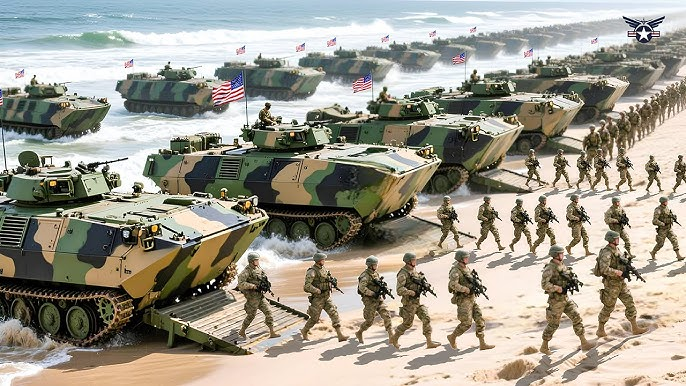
A plausible interpretation is that this pause may not be about de-escalation but about preparation. By the time the five-day window expires, U.S. expeditionary Marine forces, estimated between 2,000 and 5,000 troops, from bases in the United States and Japan are expected to have arrived in the region. In addition, thousands of troops from the 82nd Airborne Division, stationed at Fort Bragg, North Carolina and capable of rapid global deployment within 24 hours, have been reportedly issued their deployment orders.
This raises the critical question of whether the so-called lull is merely a tactical delay designed to facilitate the buildup of ground forces for a potential ground invasion of Iran.
Military analysts have long argued that regime change of the kind Trump and Netanyahu desire cannot be achieved through aerial bombardment alone. It requires boots on the ground. If that assessment holds true, then the current pause may well be the prelude to a far more dangerous phase of the war.
One is reminded of the ten-day negotiation window previously announced in Oman, a process that ultimately appeared to serve as a decoy for the deployment of U.S. naval and air assets to the region. Once those assets were in place, negotiations abruptly collapsed, and Iran was attacked the following day, on 28 February 2026.
The parallels are difficult to ignore.
Thus, the proposed 48-hour “negotiation” in Pakistan, combined with Trump’s vague and often contradictory declarations of imminent peace, may well constitute another strategic decoy, one intended to buy time for final military preparations.
If this interpretation proves correct, the world may be on the brink of witnessing the first large-scale ground offensive into Iranian territory, possibly within days, or by the end of March at the latest.
What remains undeniable, however, is the human and material cost of this war. Lives have been lost in staggering numbers, cities reduced to rubble, entire communities displaced and economies slumping rapidly. In the midst of this devastation, the only clear beneficiaries appear to be the global arms manufacturers, particularly those at the forefront of drone and missile technologies, now rendered even more lethal through artificial intelligence (AI) tools.
At a time when humanity should be advancing toward greater cooperation and stability, it instead finds itself ensnared in yet another cycle of destruction.
May sanity, peace, and tranquility be restored to our world.
Lt. Colonel Samsudeen Sarr (Rtd)
Former Commander of The Gambia National Army