
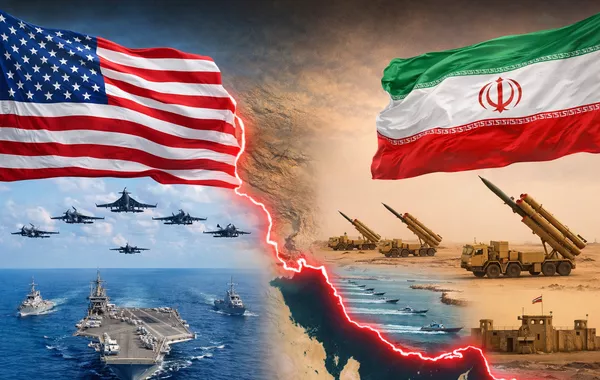
In a dramatic escalation of hostilities that has shaken the Middle East and reverberated around the world, the conflict between the United States, Israel and Iran has entered its second week of fierce military engagements, with strikes, counter-strikes and regional instability intensifying daily. What began with a coordinated offensive on Iranian territory has now expanded into a broader confrontation involving multiple countries, significant casualties, and grave diplomatic challenges.
The joint U.S.–Israeli military campaign, launched at the end of February and known among Western officials as Operation Epic Fury, was aimed at crippling Iran’s strategic capabilities, including its missile systems, air defenses and command structures. Central to the conflict was the targeted killing of Iran’s supreme leader, Ayatollah Ali Khamenei, during an airstrike on Tehran, an action confirmed by Iranian state media and acknowledged by international observers.
According to military statements from the U.S. Central Command, the attacks have successfully eliminated several key Islamic Revolutionary Guard Corps command centers and air defense sites, significantly degrading Iran’s ability to respond effectively.
In response, Iranian forces have launched a series of missile and drone attacks across the region, targeting not only Israeli territory but also U.S. military bases and allied nations hosting American personnel. One of the most notable incidents occurred in Saudi Arabia’s capital, Riyadh, where a multi-drone assault struck the U.S. Embassy, causing structural damage and prompting shelter-in-place orders for embassy staff and civilians.
The violence has not been confined to direct U.S. and Iranian forces. Proxy groups allied with Tehran, including the Lebanese militant organisation Hezbollah, have launched rockets and drones into northern Israel, which in turn has responded with airstrikes on Hezbollah positions in Beirut and surrounding areas. Casualties from these exchanges have been reported in multiple locations, contributing to a rising civilian death toll throughout the region.
The conflict’s human cost is stark. Official U.S. military sources have reported that at least six American service members have been killed in recent operations — a sobering milestone reflective of the intense nature of the fighting. While Iranian casualty figures vary, several hundred deaths have been reported, including civilians in major urban areas struck by air campaigns.
Beyond the battlefield, the war has triggered widespread geopolitical consequences. The United States has instructed non-essential diplomatic personnel to evacuate from several Middle Eastern capitals, including Bahrain, Iraq and Jordan, amid concerns over deteriorating security conditions. Regional airspace closures and disruptions to shipping through the Strategic Strait of Hormuz — a vital artery for global energy transport — have sent shockwaves through international markets.
In Washington and allied capitals, leaders face mounting pressure to articulate clear objectives and timelines. U.S. officials have publicly downplayed fears of an “endless war” while conceding that the conflict may continue beyond initial estimates, and critics question the strategic rationale for prolonged military involvement without tangible diplomatic gains.
With no clear end in sight, efforts by the United Nations and global powers to mediate a ceasefire have intensified, but substantive progress remains elusive. As the conflict deepens, analysts warn that the crisis could reshape Middle Eastern geopolitics for years to come.