A senior official from the United Democratic Party stated that the party will only join a political coalition if its longtime leader, Ousainou Darboe, is recognized as the coalition’s presidential candidate. This declaration sets a clear boundary as opposition groups start to align themselves in preparation for the upcoming elections.
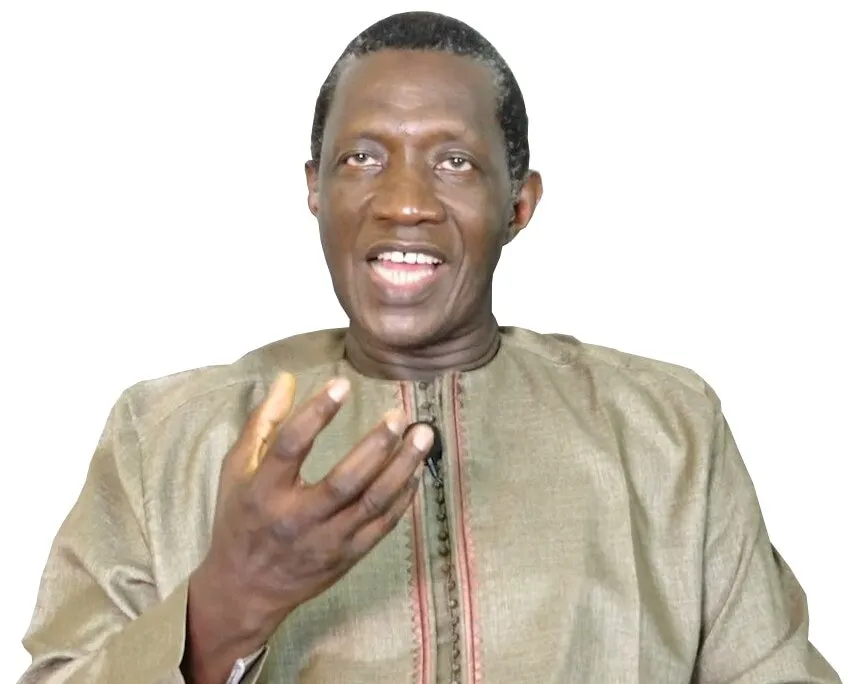
Lamin Manneh, the deputy administrative secretary for external affairs of the party, stated in an interview with Mustapha K. Darboe on his verified podcast that the issue of leadership was “not negotiable,” highlighting that Mr. Darboe’s position as flag bearer and party leader was firmly established within the UDP.
“That is not negotiable, let’s be clear. You can’t ask us to go to another flag bearer selection because you don’t like Ousainu,” Mr. Manneh said. “Ousainu is our candidate, Ousainu is our flag bearer, and Ousainu is our party leader, so if you are going to work with us, you have to first accept that Ousainu is going to be our flag bearer for the next election.”
Mr. Manneh emphasized that, in addition to leadership, any coalition must be based on shared policy priorities. He cautioned that alliances lacking common programs would find it difficult to offer a credible agenda to voters.
“Policy alignment is important,” he said. “If you come to an agreement to work together as a set of parties but you don’t agree on policy and programs and agendas, so what do we say to the Gambian people?”
Mr. Manneh portrayed Mr. Darboe as a highly regarded individual, emphasizing that his influence is grounded in his principles and development agenda. He contended that the UDP desires his leadership to be more than symbolic, advocating for a clearly defined UDP platform.
“Ousainou is loved in this country because of his principles, his stance on development, and what he is proposing to the Gambian people,” he said. “That is what we want to sustain.”
He also dismissed options that would marginalize Mr. Darboe or recreate what he described as the disjointed dynamics of the 2016 coalition, when multiple candidates from allied parties subsequently followed independent political trajectories. “That’s not negotiable,” he said. “We want to do this, but we have to be realistic.”
Mr. Manneh presented the UDP’s platform as centered around the people, rather than being limited to infrastructure, contending that potential partners should embrace a wider vision. “Our agenda is primarily people-based, and all sectors support that agenda. Roads alone are not enough; partners must share the same vision,” he said.