
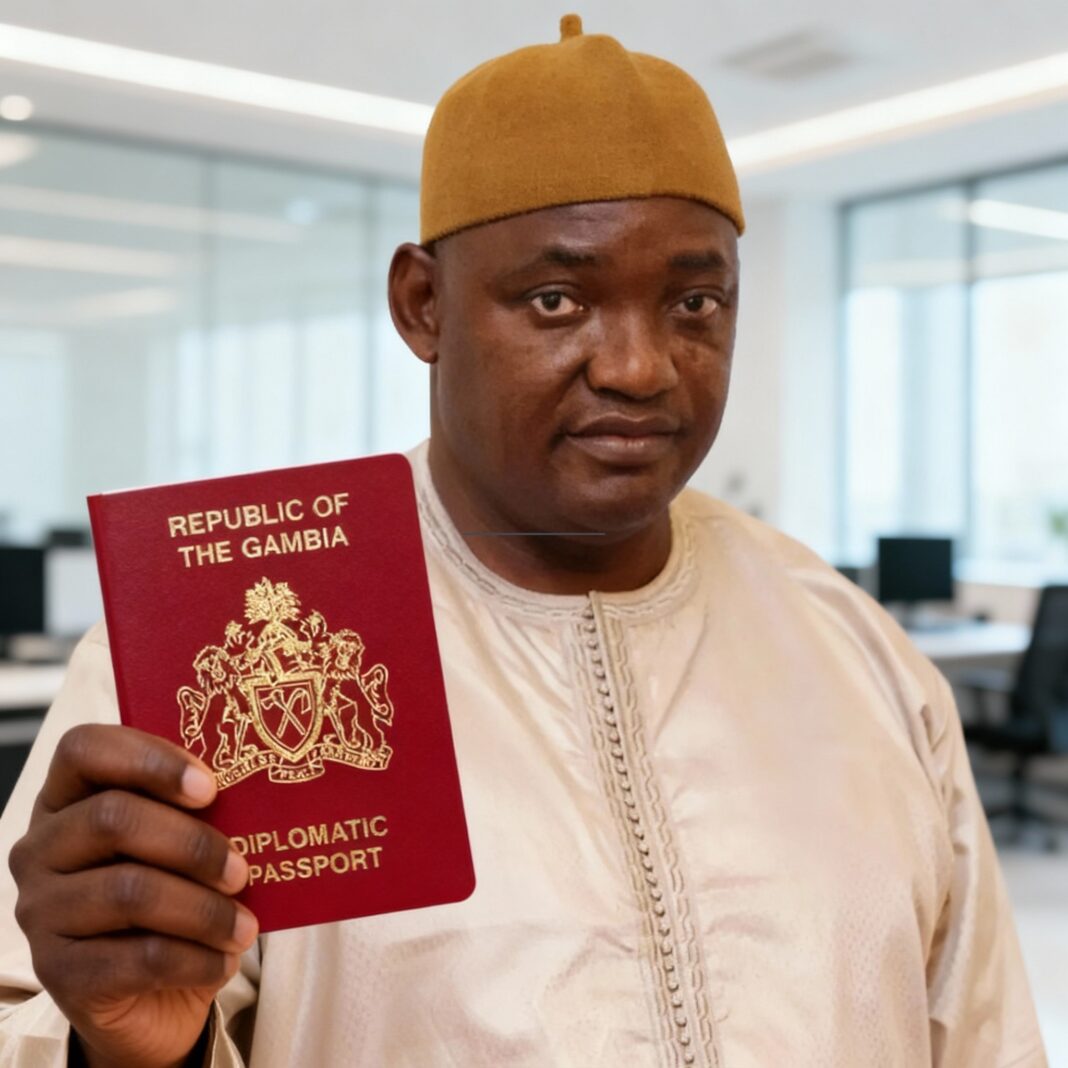
The Edward Francis Small Centre for Rights and Justice takes note of a Government press release issued on October 24, entitled, “Clarification on false claims about the issuance of 20,000 diplomatic passports by the Government of The Gambia.” We have reviewed the press release against the facts and found the information therein to be grossly inadequate. Therefore, we hereby issue this public statement accordingly to demand transparency.
What is Already on Record
- In December 2024, the (former) Minister of Foreign Affairs Dr. Mamadou Tangara told the National Assembly that 3,030 diplomatic passports were issued between January 2017 and October 2024.
- The National Audit Office (NAO) conducted a special audit on diplomatic and service passports for 01 January 2017 to 31 August 2019, finding “material deficiencies” in applications, approval and issuance, including ineligible holders and weak stock controls.
- In July 2025, the Vice President Mr. Muhammed B.S. Jallow told Parliament that detailed lists of holders are “confidential” and advised NAMs to seek them from Immigration while revealing many passports had been cancelled without giving numbers.
- Allegations of a “20,000” total have circulated in the media, quoting a Senegalese journalist, though no official document substantiates that number.
Why the Government Rebuttal is Incomplete and Misleading
We find the Governments press release to be incomplete and misleading for the following reasons.
- Straw-man defense: Saying “it is not 20,000” does not properly answer the issue. The Government has not said how many diplomatic passports have been issued as of today. The Government’s last official total (3,030) stops at Oct 2024 and excludes 2025. There is no evidence to confirm the veracity of this figure.
- No year-by-year data: The Government has not given a breakdown by year and category of beneficiaries of diplomatic passports (e.g., ministers, NAMs, judiciary, diplomats, protocol, honorary consuls, spouses/dependents, others). Without this, accountability is impossible.
- Audit follow-through unclear: The NAO’s 2017 – 2019 findings flagged ineligible holders, sequencing, and stock-control lapses. Government has not published a compliance report showing which passports were recalled or cancelled and what disciplinary actions were taken.
- Opacity on cancellations: Officials had said many passports have been cancelled, but no totals, dates, or reasons (lost/theft, ineligible, duplication, court order) have been disclosed.
- Confidentiality overreach: Invoking “privacy” to block even aggregate, non-personal data (e.g., totals by year/category) is unnecessary and undermines transparency.
- Judicial outcomes are still murky: The well-known High Court diplomatic passport case since 2020 involving Mansa Sumareh, a former State House driver, and Ebrima J. Sanneh, a former employee of the Ministry of Foreign Affairs remains inconclusive, five years later, showing another gap in accountability.
What The Public Deserves Today
To move beyond rumour and rebuttal, EFSCRJ calls on the Government to publish within 7 days the following non-personal, aggregate information:
- Updated total of diplomatic passports issued between January 2017 and October 2025, with a year-by-year breakdown and by category of recipients: Ministers, Permanent Secretaries, NAMs, Judicial Officers, Diplomats, Protocol, Honorary Consuls including non-Gambians, Spouses/Dependents, Private Citizens, CSO Leaders, and Others.
- Cancellations/recalls made by year and reasons, such as loss/theft, ineligibility, duplication, expiry, policy breach, court order.
- Policy and SOPs currently in force such as eligibility, approving authority, renewal rules, stock-control, and recall procedures.
- Audit response matrix to the NAO special audit such as actions taken, dates, and responsible officers.
These disclosures can be provided without naming individuals to satisfy legitimate privacy concerns while honouring the public’s right to know. Without providing this information, the Government rebuttal only raises more questions and doubts than provide clarity and accountability.
Our Next Steps
EFSCRJ will on Monday October 27 dispatch an Access to Information (ATI) request jointly to the Ministry of Foreign Affairs and the Department of Immigration seeking the above information. We will publish any responses received. Until then, we find the Government’s denial of issuing 20,000 diplomatic passports from 2017 to date without providing up-to-date totals, year-by-year numbers, audit follow-through, and court outcomes falls short of transparency.
2025 – The Year of Transparency and Accountability