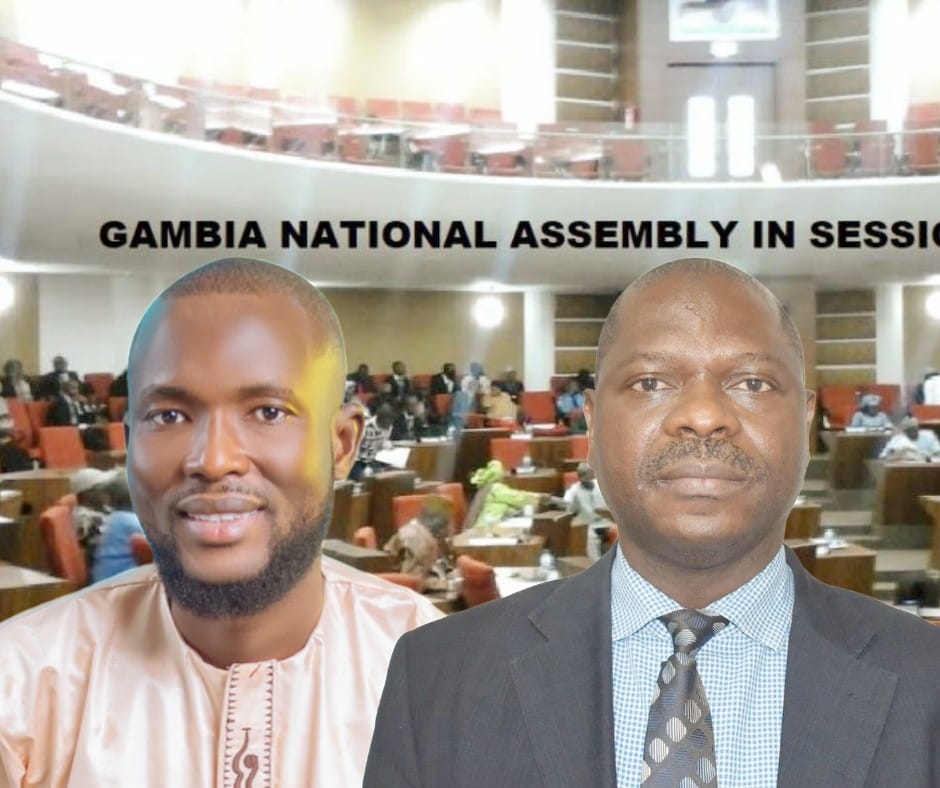
The budget of the Gambia is the second most significant document, following the constitution, according to Modou B. Bah, a national assembly member who represents Banjul north constituency, in an interview with AG radio. The national budget is nearly D53 billion, not D52 billion, as many Gambians are claiming. The entire budget is D52,980,894,173, which is nearly D53 billion. Can you envision a budget of nearly D53 billion? The Gambia government is only able to provide 71% of the budget, which is approximately D37,848,776,334 almost D38 billion. This is a significant concern to me, as it means that the government must rely on loans and grants to cover the remaining 29%.
It is anticipated that 23.9% of the 29%, which will be allocated as grants or loans, will be in the amount of approximately D12.6 billion. This alone should cause concern for any Gambian who comprehends the budget dynamics, particularly in the context of a government that is reliant on grants. Program grants and project grants are the two categories of grants, and not all grants are awarded.
The government received a mere D52.3 million in grants in 2023. Therefore, if the government anticipates a grant projection of D12.6 billion in 2025, it is imperative that a serious country avoid such a dire situation, particularly in terms of its budget. This is a matter of great concern to my constituents and me. Upon consulting with my constituents, they expressed considerable concern regarding the country’s future trajectory. Gambia’s economy was predicated on agriculture and tourism during the previous two republics; however, it is currently reliant on taxes.
Agriculture, health, and education are the three critical areas that must be prioritised in order to achieve a meaningful development in the quality of life for the populace. However, it is difficult to fathom that the government can only allocate D945 million to the ministry of agriculture when compared to the ministry of finance, which was allocated D2.4 billion, which accounts for approximately 5.68% of the total government local funds.
Therefore, this is a significant issue, and the government has even prioritized the ministry of finance over the ministry of agriculture. This is a significant issue that we as a nation must not foster. This implies that we are not prepared to address the issue of food sufficiency. Gambians will face increased hardship in 2025 because the government is not prioritizing agriculture and food sufficiency.